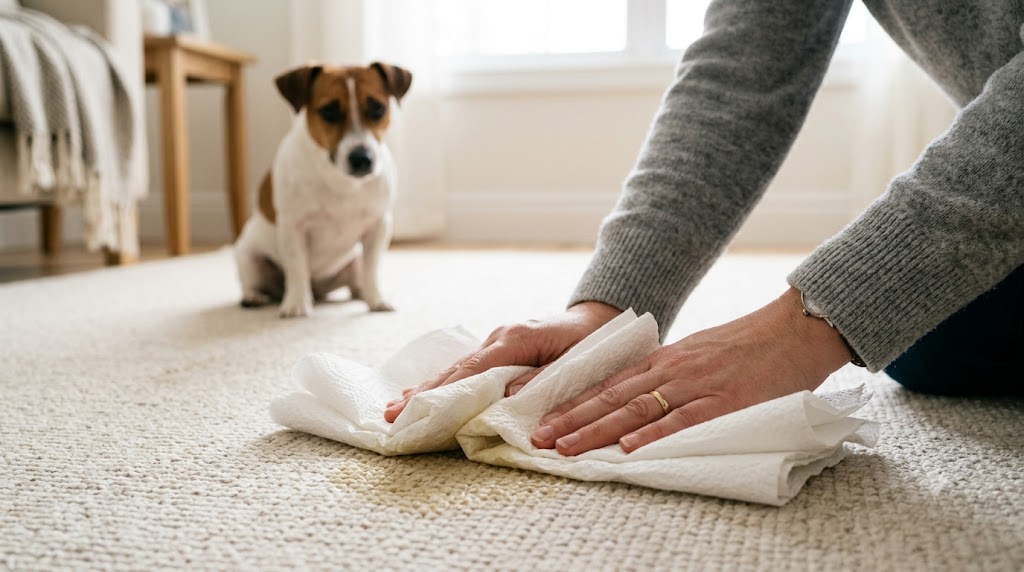
Let’s be honest—if you share your home with a dog or cat, you’re going to deal with accidents. Whether it’s a puppy still learning the ropes, an elderly dog with bladder issues, or a cat who decided the litter box was beneath them today, pet stains are part of the package.
The good news? You don’t need harsh chemicals to get your carpets, rugs, and upholstery looking—and smelling—fresh again. With a few ingredients from your pantry and the right technique, you can tackle even stubborn pet stains naturally.
Here’s your complete, US-friendly guide to removing pet stains the safe, effective way.
Here I am giving the answer of the question, How to remove pet stains naturally my lebel best.
Why Natural Cleaners Work Better for Pet Stains
Before we get into the how, let’s talk about why natural ingredients are your best bet.
Commercial cleaners often mask odors rather than eliminate them. That fresh linen scent might fool your nose, but your pet’s far more sensitive sniffer can still detect the uric acid crystals left behind. That’s why pets often pee in the same spot again—they’re following the scent you can’t smell.
Natural cleaners, used correctly, break down stains at a molecular level. White vinegar, baking soda, and 3% hydrogen peroxide are safe to use in households with dogs and cats when used properly . Plus, they’re biodegradable, budget-friendly, and won’t release volatile organic compounds into your home.
The 3-Step Natural Cleaning Method That Works
According to pet care professionals, the most effective natural stain removal follows a specific sequence. Here’s the formula:
Step 1: Blot, Don’t Scrub
This is the golden rule. When you discover a fresh accident, grab paper towels or a clean cloth and blot the area firmly—do not rub or scrub .
Rubbing spreads the stain deeper into carpet fibers and makes it harder to remove. Keep blotting with fresh towels until little to no moisture transfers. For solid waste, scrape it up with a dull knife or spatula first .
Step 2: Apply a Vinegar Solution
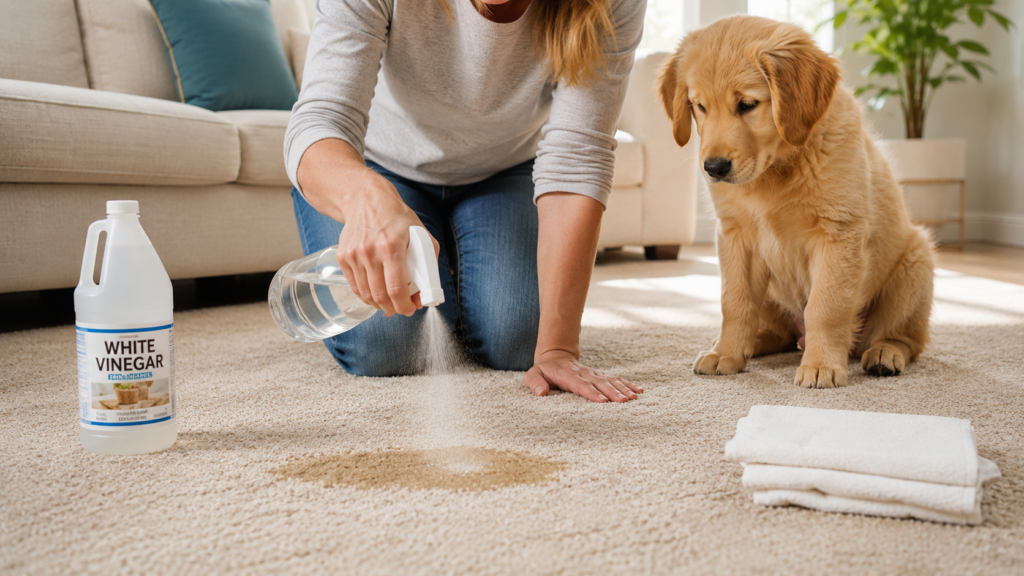
Mix equal parts white vinegar and water in a spray bottle . White vinegar contains acetic acid, which neutralizes the alkaline salts in dried pet urine and kills odor-causing bacteria on contact .
Spray the affected area generously and let it sit for 5 to 10 minutes . The vinegar breaks down the stain compounds and helps lift them from the fibers.
Important: Never use undiluted vinegar on carpets or fabrics, as it can cause discoloration. And skip vinegar on wood, marble, or natural stone surfaces—it’s too acidic .
Step 3: Add Baking Soda and Wait
While the area is still damp, sprinkle a thick layer of baking soda over the stain. Baking soda absorbs moisture, neutralizes odors, and provides gentle abrasion to lift pigment .
You’ll see it start to fizz—that’s the reaction working to lift the stain . For best results, let the baking soda sit for 8 to 12 hours or overnight. Then vacuum thoroughly.
For Tougher, Set-In Stains: Bring Out the Big Guns
Sometimes an accident goes unnoticed until it’s dry and yellowed. For older or stubborn stains, you’ll need a stronger natural solution.
Hydrogen Peroxide + Dish Soap Paste
Mix 1 cup of 3% hydrogen peroxide with 1 teaspoon of mild dish soap (like Dawn) .
Using a soft brush or toothbrush, work the mixture into the stain. Let it sit for 10 to 15 minutes, then blot with a clean cloth until the stain lifts .
Important: Always test hydrogen peroxide on a hidden spot first—it can bleach some colored fabrics . And only use the 3% concentration available at any US drugstore or supermarket; higher concentrations are too harsh.
The Truth About Vinegar vs. Enzyme Cleaners
You’ll find debate online about whether vinegar is actually effective for pet stains. Here’s the real answer:
Vinegar is excellent for fresh stains and surface odors. It neutralizes ammonia and kills bacteria on contact . However, vinegar cannot fully break down uric acid crystals that bond to fibers over time because it lacks the enzymes required to break down proteins .
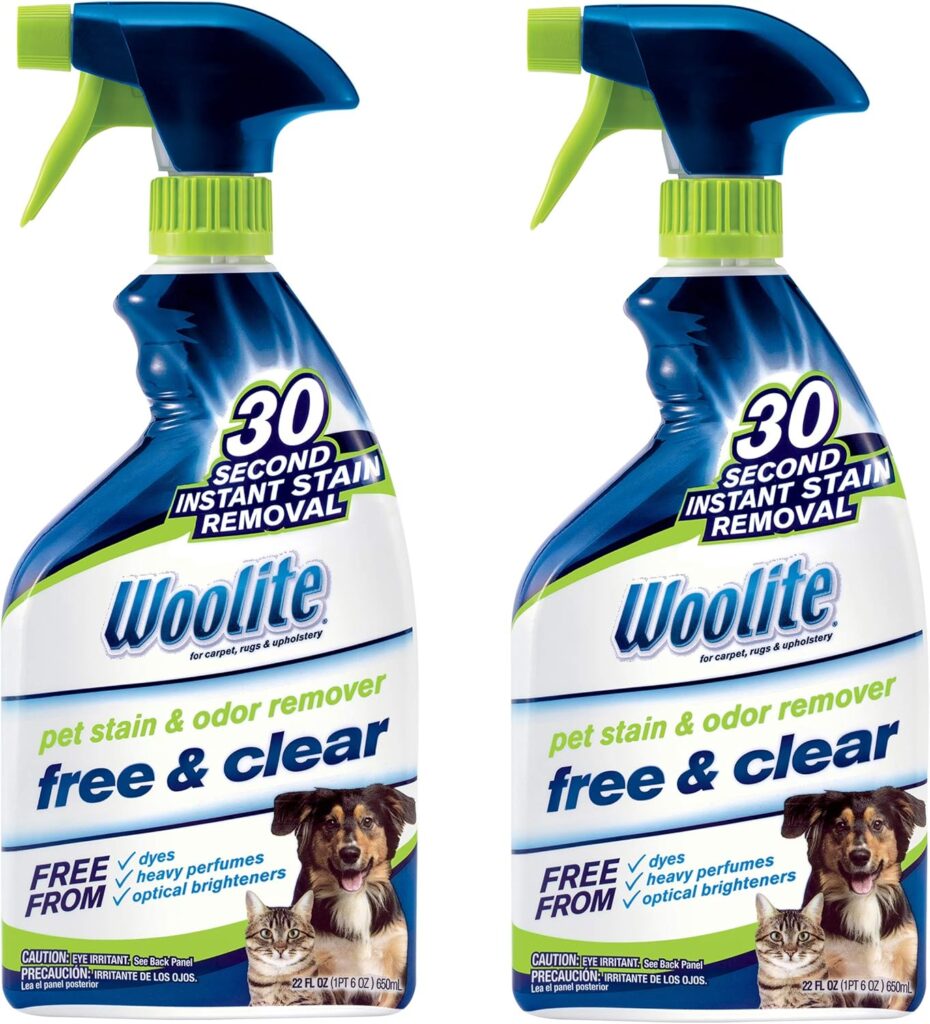
That’s where enzyme-based cleaners come in. Enzymatic formulas contain protease and urease—biological catalysts that permanently decompose uric acid so the odor can never return, even with humidity changes .
A practical test: apply the vinegar solution, sprinkle baking soda, wait overnight, and vacuum. If the odor returns within 48 hours, the uric acid crystals are still intact and the stain requires enzyme treatment .
The practical advice: Use vinegar and baking soda for quick cleanup of fresh accidents. For old, dried stains, or if your pet keeps returning to the same spot, invest in a commercial enzyme cleaner like Nature’s Miracle . Many are now made with natural, biodegradable ingredients.
What to avoid: Never use ammonia-based cleaners on pet stains—ammonia is a component of urine and can actually attract your pet back to the spot . Also avoid steam cleaners on urine stains; the heat can permanently set the stain into fibers .
Surface-Specific Tips for US Homes
Carpets and Rugs: Follow the 3-step method above. For large area rugs, you may need to treat the backing as well if urine soaked through. Avoid wool rugs with vinegar—it can cause permanent discoloration or fiber damage .
Hardwood Floors: Vinegar can damage wood finishes. Instead, use a mix of water and a few drops of dish soap—apply sparingly with a damp (not wet) cloth and dry immediately .
Upholstery: Test any solution on a hidden spot first. Blot gently, as upholstery fabrics can be more delicate than carpet .
How to Keep Pets from Re-Peeling on the Same Spot
Even after cleaning, pets may return to familiar spots. Here’s how to break the cycle:
Use an enzyme cleaner to completely eliminate the scent trail
Clean up accidents immediately—the longer urine sits, the more it bonds to fibers
Consider a black light to find all the spots you might have missed (urine glows under UV light)
Quick Reference: Natural Pet Stain Remover Recipes
| Stain Type | Recipe | Instructions |
|---|---|---|
| Fresh urine | Equal parts white vinegar + water | Spray, wait 5–10 min, blot. Sprinkle baking soda, wait overnight, vacuum |
| Old/set urine | 1 cup 3% hydrogen peroxide + 1 tsp mild dish soap | Apply, wait 10–15 min, blot. Test first for colorfastness |
| Odor only | Sprinkle baking soda liberally | Leave 8–24 hours, vacuum |
| Deep/set stains | Vinegar pre-treatment + enzyme cleaner | Vinegar first, blot, then apply enzyme cleaner and follow dwell instructions |
When to Call a Professional
f the stain has soaked into the carpet padding beneath, or if the odor persists after two rounds of treatment, it may be time to call a professional carpet cleaner . Look for US companies that use water extraction methods and pet-safe, enzyme-based products .
And if your pet is having frequent accidents, it’s worth a vet visit—it could signal a urinary tract infection or other health issue .
The Bottom Line
Pet stains don’t have to mean throwing away your favorite rug. With white vinegar, baking soda, hydrogen peroxide, and a little patience, you can clean up naturally without exposing your family or furry friends to harsh chemicals.
Remember the three rules:
Blot, don’t scrub
Vinegar for fresh stains, enzyme for old ones
Give baking soda time to work
Your nose—and your pet—will thank you.
Have a pet stain tip that works wonders? Share it with us in the comments!
