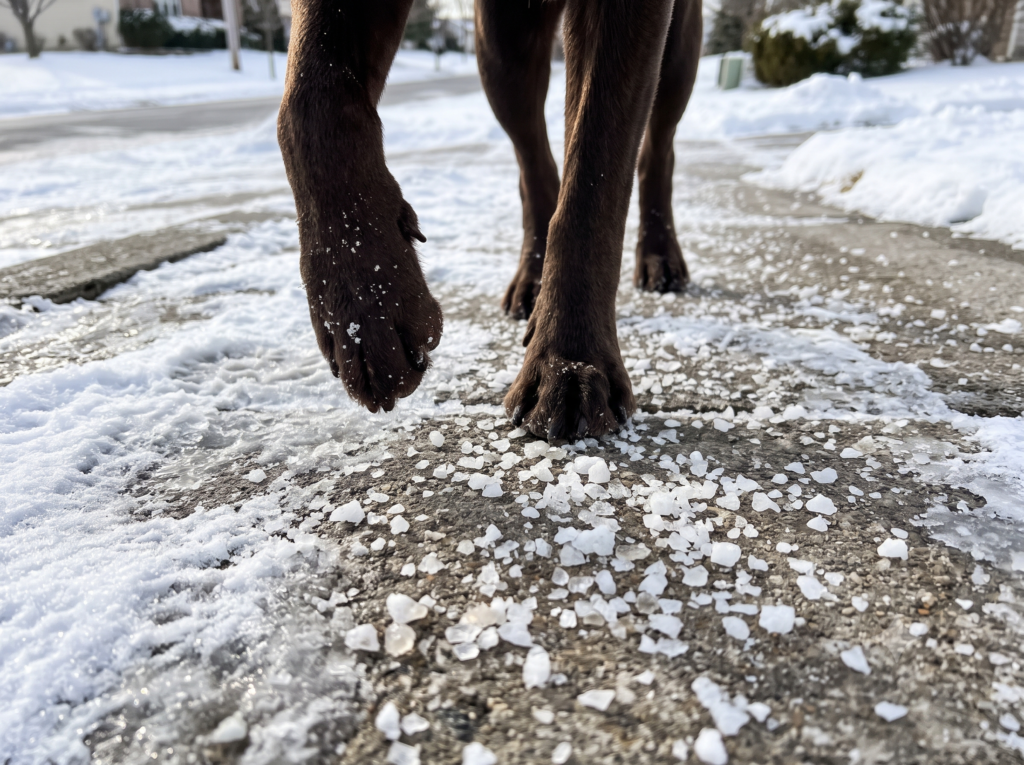
If you live in Michigan, you know that winter isn’t just a quick dusting of snow. From heavy lake-effect snowstorms in Grand Rapids and the Upper Peninsula to slushy, heavily salted sidewalks in Detroit and Ann Arbor, the Great Lakes winter can be brutal on a dog’s bare paws.
Within minutes of stepping outside, freezing temperatures strip moisture from paw pads, ice balls pack tightly between toes, and sharp chemical de-icers cause painful stinging and chemical burns. Choosing the best dog paw balm for Michigan winters comes down to understanding one crucial rule: you need a dense barrier wax before the walk to block salt and snow, and a soothing repair balm after the walk to heal dryness.
Quick Answer: The Best dog paw balm for Michigan winters at a Glance
Best Overall Pre-Walk Barrier: Musher’s Secret Paw Protection Natural Dog Wax — A dense, food-grade blend of beeswax, carnauba, and candelilla waxes that shields paws from road salt and prevents ice buildup between toes.
Best for Cracked & Dry Pads: Natural Dog Company Paw Soother — A rich, lick-safe botanical butter balm formulated to hydrate and repair rough, chapped pads overnight.
Best Light Everyday Protector: Natural Dog Company PawTection — A thinner, plant-based wax stick ideal for dogs that dislike heavy textures during quick daily potty breaks.
Best Budget Overnight Ointment: Bag Balm Pet Nose, Paw & Hot Spot Moisturizer — An affordable lanolin-and-petrolatum classic that softens severely dry pads (best used with dog socks at bedtime).
Why Michigan Winters Are So Tough on Dog Paws
Unlike human winter boots, canine paw pads are exposed directly to sub-zero surfaces and harsh municipal de-icers. According to the American Veterinary Medical Association (AVMA), cold weather poses two major threats to your dog’s feet:
Rock Salt and Chemical De-Icers: Cities and homeowners rely heavily on sodium chloride, calcium chloride, and magnesium chloride to melt ice. These crystals lodge in the crevices of your dog’s pads, drawing out moisture and causing painful cracking, redness, and chemical irritation.
Compacted Ice Balls: In fluffy lake-effect snow, moisture freezes into hard ice clumps in the fur between your dog’s toes. This forces the toes apart as your dog walks, leading to chafing, limping, and small cuts.
Toxic Ingestion Risk: When dogs come inside with salty, stinging paws, their natural instinct is to lick them. Ingesting road salt and antifreeze residue can cause drooling, vomiting, diarrhea, and electrolyte imbalances.
Barrier Wax vs. Healing Balm: Know the Difference
One of the biggest mistakes pet parents make is buying a soft moisturizing lotion and expecting it to block slush and rock salt. Winter paw products fall into two distinct categories:
| Feature | Pre-Walk Barrier Wax | Post-Walk Healing Balm |
| Primary Job | Repels water, snow, ice, and road salt | Moisturizes and repairs dry, cracked pads |
| Texture | Firm, dense, semi-permeable wax | Soft, creamy, fast-absorbing butter or oil |
| When to Apply | 5–10 minutes before going outside | After wiping paws clean indoors, or at bedtime |
| Key Ingredients | Beeswax, carnauba wax, candelilla wax, vitamin E | Shea butter, coconut oil, mango butter, calendula |
4 Best Dog Paw Balms and Waxes for Michigan Winters
1. Musher’s Secret Paw Protection Natural Dog Wax (Best Pre-Walk Shield)
Originally developed in Canada for sled-dog teams, Musher’s Secret is widely considered the gold standard for extreme Great Lakes winters. Rather than sitting on the surface like a greasy lotion, it absorbs into the pad to form a breathable, dense shield.
Key Ingredients: White and yellow beeswax, carnauba wax, candelilla wax, vegetable oils, and vitamin E (free from petroleum, lanolin, and nut oils).
Why It Works in Michigan: It stops wet snow from balling up in the fur between your dog’s toes and creates a physical barrier against harsh sidewalk salt.
Pros: Food-grade and non-toxic if licked; doesn’t stain carpets once absorbed; lasts through long snowy walks.
Cons: Designed primarily for protection rather than deep overnight healing of severely split pads.
2. Natural Dog Company Paw Soother (Best for Dry, Cracked Pads)
If your dog’s pads already feel rough like sandpaper or show minor winter chapping, Paw Soother is built specifically for recovery. Available in both a tin and a convenient twist-up stick, it melts on contact with warm skin.
Key Ingredients: Organic coconut oil, organic mango butter, organic cocoa butter, candelilla wax, chamomile, calendula, and vitamin E.
Why It Works in Michigan: Indoor forced-air heating dries out a dog’s skin just as much as outdoor windchill. Applying this balm after evening walks restores elasticity to brittle pads.
Pros: 100% plant-based and lick-safe; twist-up stick keeps your hands clean.
Cons: Too soft to serve as a heavy-duty barrier against deep slush and rock salt on its own.
3. Natural Dog Company PawTection (Best Everyday Light Barrier)
For dogs that refuse to wear winter boots and dislike the feel of thick waxes, PawTection offers a lighter, plant-based protective layer.
Key Ingredients: Sunflower oil, candelilla wax, carnauba wax, mango butter, rice bran oil, and vitamin E.
Why It Works in Michigan: Great for quick backyard potty breaks or neighborhood walks on plowed pavement where a thin barrier is enough to block residual salt dust.
Pros: Vegan, beeswax-free formula; easy to glide on quickly before clipping on the leash.
Cons: Needs more frequent reapplication during deep snow or long trail hikes compared to heavy waxes.
4. Bag Balm Pet Nose, Paw & Hot Spot Moisturizer (Best Budget Option)
A staple in northern barns and households for over a century, Bag Balm offers a thick, heavy-duty ointment at a budget-friendly price point.
Key Ingredients: Petrolatum (petroleum jelly), lanolin, and 8-hydroxyquinoline sulfate.
Why It Works in Michigan: The ASPCA notes that massaging a thin layer of petroleum-based protectant into paw pads before a walk can help shield against salt, and its thick lanolin base excels at softening calloused winter pads overnight.
Pros: Very affordable and widely available at Michigan pharmacies, hardware stores, and pet shops.
Cons: Because it is petroleum-based, ingesting large amounts can cause mild stomach upset, and it can leave greasy marks on hardwood floors if you don’t cover paws with socks.
How to Apply Paw Balm Properly (Step-by-Step Routine)
Even the best paw wax won’t work if road salt is trapped underneath it. Follow this simple 4-step routine every time you head out into the snow:
Trim Interdigital Fur: Keep the long hair between your dog’s toes trimmed flush with the pads. Less fur means fewer places for snow and salt crystals to cling.
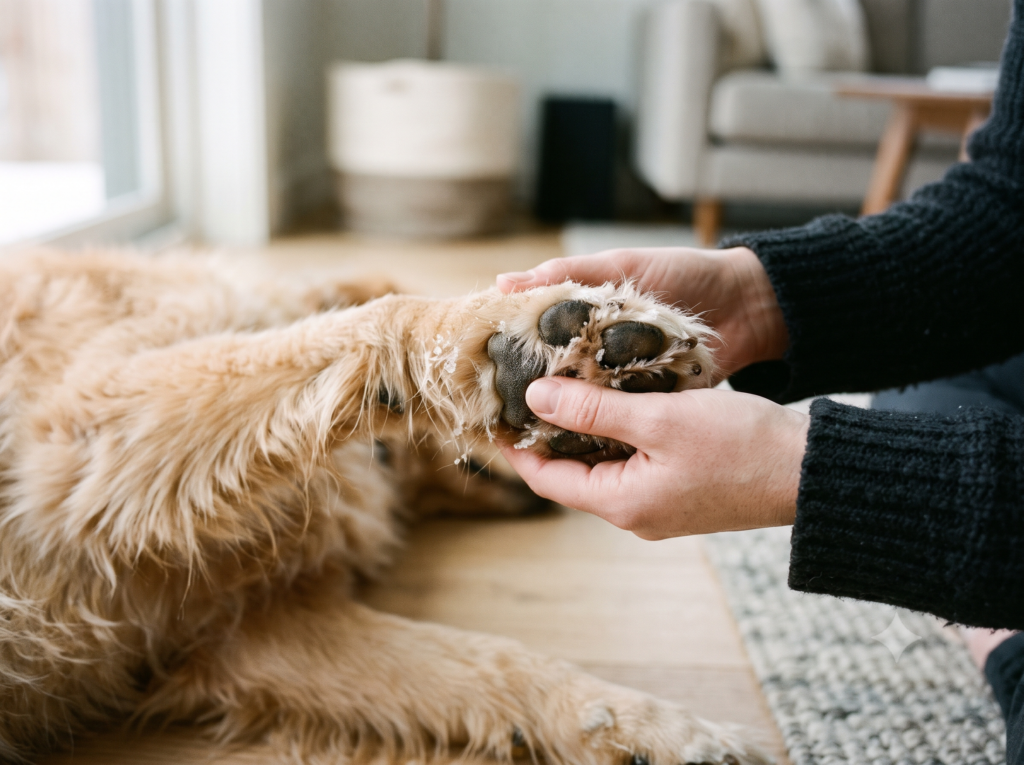
Apply Barrier Wax Before Stepping Out: Rub a thin, even layer of wax across all four main pads, the smaller toe pads, and the skin between the toes. Wait 1–2 minutes for it to set so it doesn’t wipe off on your hallway rug.
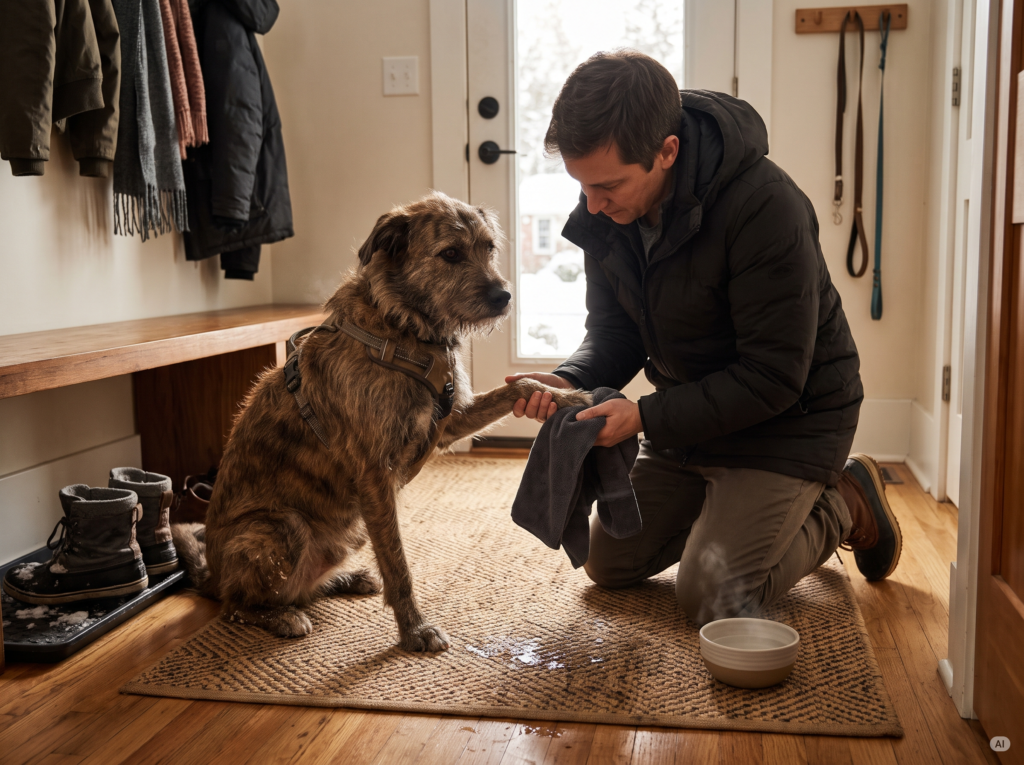
Wipe Paws Immediately After Every Walk: Keep a bowl of lukewarm water and a microfiber towel (or unscented pet wipes) right by the front door. Gently wash away any salt, sand, or slush before your dog licks their feet.
Apply Repair Balm at Bedtime: Once the paws are clean and completely dry, massage a moisturizing balm into any rough spots while your dog rests for the night.
Common Winter Paw Care Mistakes to Avoid
Using Human Hand Lotion: Human lotions often contain artificial fragrances, zinc oxide, or ingredients that are toxic if licked, and they actually soften pads too much, making them prone to tearing on rough ice.
Skipping the Post-Walk Wipe Down: Applying fresh balm over dirty, salt-covered paws seals the irritating chemicals directly against your dog’s skin. Always clean first.
Waiting Until Pads Bleed: Dry, cracked skin takes days to heal in winter. Start applying barrier wax early in November before the first heavy salt trucks hit the roads.
When to Consult a Veterinarian
While mild dryness and surface roughness can be managed safely at home with paw balms, you should contact a licensed veterinarian if you notice any of the following warning signs:
Deep cracks, bleeding, or open sores on the paw pads
Persistent limping or refusal to put weight on a leg
Red, swollen, or foul-smelling skin between the toes (a sign of secondary bacterial or yeast infection)
Excessive licking, chewing, or signs of frostbite (pale, gray, or bluish skin that feels cold and hard)
Frequently Asked Questions (FAQs)
Veterinarians typically recommend wiping your dog’s paws with warm water after every walk to remove road salt and applying a pet-safe barrier wax (like Musher’s Secret) or thin layer of petroleum jelly before going outside in snow and ice.
Yes. Musher’s Secret is made from 100% natural, food-grade waxes (beeswax, carnauba, and candelilla) and vegetable oils with vitamin E, making it non-toxic if your dog licks their paws. However, you should still wipe off road salt after walks so your dog doesn’t ingest de-icing chemicals.
For short neighborhood walks and backyard breaks, a thick barrier wax is usually enough and much easier to apply than boots. However, if you go on long winter hikes, walk in sub-zero windchills, or your dog has sensitive feet, pairing paw balm with well-fitted dog boots provides the highest level of protection.
During active snow and heavy road-salt conditions, apply a protective wax before every walk on salted sidewalks. For general maintenance in dry winter weather, applying 2 to 3 times a week helps keep pads pliable and hydrated.
Plain coconut oil is great for moisturizing dry pads indoors, and it is lick-safe. However, it melts quickly at body temperature and does not stay on long enough to block ice, slush, or rock salt outdoors—pair it with a beeswax or carnauba-based protector for walks.
Pet-safe ice melts use urea or magnesium-based formulas without sharp rock salt crystals or toxic chlorides. Switching to a pet-safe de-icer on your own Michigan driveway and porch significantly reduces paw irritation, though you should still wipe your dog’s paws after walking on public sidewalks.
Conclusion
Michigan winters don’t have to mean painful, salt-burned paws for your dog. By keeping a tin of Musher’s Secret by the front door for pre-walk protection, wiping off road salt as soon as you come inside, and using a soothing balm like Natural Dog Company Paw Soother for dry spots, you can keep your pup comfortable all season long.
Does your dog prefer paw wax or winter boots when the snow piles up? Share your favorite winter paw care tip in the comments below!
Affiliate Disclosure: AllPetCaretaker.com is reader-supported. If you buy through links on our site, we may earn a small affiliate commission at no extra cost to you. Always consult your veterinarian before starting a new topical care routine for injured or bleeding paws.
