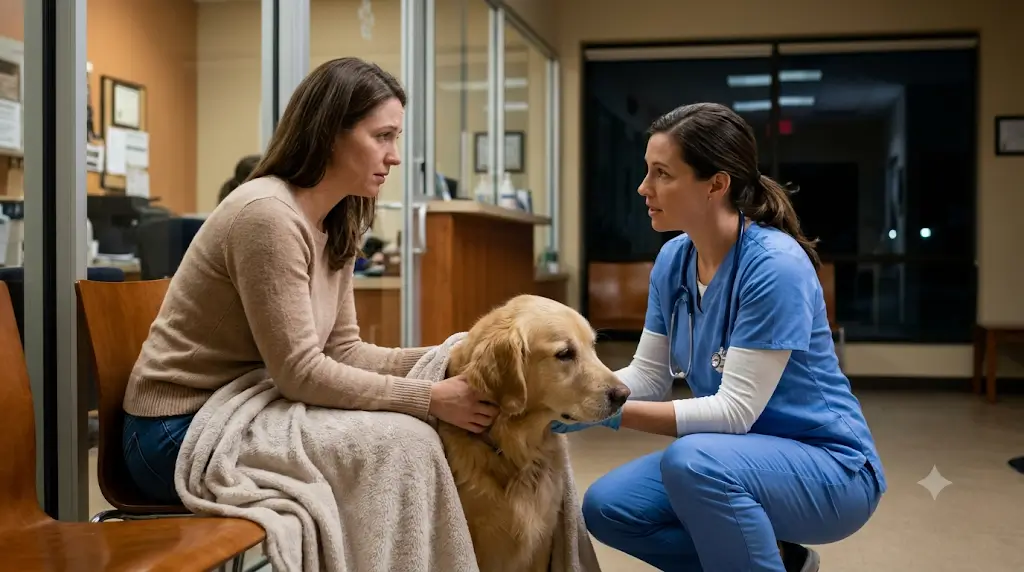
Imagine it’s 2 AM, and suddenly your dog starts vomiting repeatedly or your cat has trouble breathing. Your regular veterinarian is closed, and you have no choice but to look for a 24-hour emergency vet clinic.
But there’s one big concern: How much will an emergency vet visit cost at night?
Emergency veterinary care in the USA can be expensive, especially after regular business hours. The good news is that understanding the possible costs and available payment options can help you make a better decision when your pet needs urgent care.
In this guide, we’ll explain nighttime emergency vet costs in 2026, average prices across major US states, pet insurance coverage, payment plans, and ways to manage unexpected veterinary bills.
How Much Does an Emergency Vet Visit Cost at Night?
An emergency vet exam in the USA typically costs around $150–$250 at many nighttime emergency clinics, although the actual fee varies by hospital, location, and time of day.
According to CareCredit’s 2026 emergency veterinary cost guide, the national average emergency exam fee is approximately $135 for dogs and $143 for cats. The reported ranges are $107–$246 for dogs and $113–$260 for cats.
Remember, this is usually just the examination fee. Blood tests, X-rays, medication, hospitalization, and emergency surgery are charged separately.
Depending on your pet’s condition, the total emergency vet bill could reach $800–$3,000 or even more. Serious emergencies requiring surgery or intensive care may cost several thousand dollars.
Breakdown of Nighttime Emergency Vet Fees in the USA
Before visiting an emergency animal hospital, it’s helpful to understand what you might be charged for different services.
Here is an estimated breakdown of common emergency veterinary expenses in the United States in 2026.
| Emergency Vet Service | Estimated Cost (USD) |
|---|---|
| Emergency Exam / Triage Fee | $150–$250 |
| Blood Work & Laboratory Tests | $150–$350 |
| X-Rays / Diagnostic Imaging | $250–$600 |
| IV Fluids & Overnight Hospitalization | $500–$1,500+ |
| Emergency Surgery | $2,000–$5,000+ |
Important: These are practical budgeting estimates, not fixed national prices. Some individual services may cost less or more. For example, CareCredit reports an average emergency X-ray cost of approximately $310–$334 and overnight hospitalization costs of approximately $582–$619 per night, depending on the pet.
What Does the Emergency Exam Fee Include?
The emergency examination fee generally covers the initial assessment of your pet by a veterinarian.
During this examination, the veterinary team may:
Check your pet’s breathing, heart rate, and temperature.
Evaluate visible injuries and signs of pain.
Assess how serious the condition is.
Recommend blood tests, imaging, or immediate treatment.
The initial examination does not automatically include all diagnostic tests or treatments. Always ask the clinic what is included in its emergency fee.
Why Are After-Hours Vet Clinics More Expensive?
Have you ever wondered why visiting an emergency vet at midnight can cost considerably more than visiting your regular veterinarian during the day?
There are several reasons behind the difference.
1. 24/7 Veterinary Staffing
Emergency animal hospitals need veterinarians, veterinary technicians, nurses, and support staff available throughout the night, including weekends and holidays.
Maintaining this round-the-clock workforce increases operating expenses.
2. Specialized Emergency Equipment
Emergency hospitals often have advanced diagnostic and treatment equipment, including:
Digital X-ray machines.
Ultrasound equipment.
Oxygen therapy systems.
Intensive care monitoring equipment.
Emergency surgical facilities.
These resources allow veterinarians to respond to serious medical conditions quickly.
3. Night-Shift and Emergency Charges
Some emergency clinics charge additional fees for nighttime, weekend, or holiday services.
Regular daytime veterinary appointments may cost approximately $60–$90 for a basic examination, while emergency examinations can cost considerably more.
However, not every hospital uses a separate nighttime surcharge. Some include emergency staffing costs in their standard emergency examination fee.
4. Immediate Medical Attention
Unlike a regular veterinary appointment, emergency hospitals must be prepared to assess pets with potentially life-threatening conditions without a scheduled appointment.
This urgent availability and specialized care contribute to higher operating costs.
Average Emergency Vet Cost by Major US States
Emergency veterinary prices vary significantly across the United States.
The location of the clinic, local operating costs, availability of emergency hospitals, and the complexity of treatment can all affect your final bill.
The following figures are 2026 state-level emergency examination averages reported by CareCredit. They represent exam fees only, not complete emergency visits or guaranteed nighttime prices.
| US State | Dog Emergency Exam | Cat Emergency Exam |
|---|---|---|
| California | $180 | $190 |
| New York | $159 | $170 |
| Texas | $120 | $127 |
| Florida | $133 | $141 |
| Massachusetts | $188 | $200 |
| New Jersey | $148 | $157 |
| Washington | $148 | $157 |
| Colorado | $137 | $145 |
| Illinois | $122 | $130 |
| Arizona | $139 | $147 |
Source: CareCredit 2026 emergency vet cost guide. Prices are average examination costs and may differ from individual emergency clinic quotes.
Which States Have Higher Emergency Vet Exam Costs?
Based on these state averages, California, New York, Massachusetts, and Washington have higher emergency examination costs than Texas and Florida.
For example, a dog emergency examination averages around $180 in California compared with $120 in Texas.
However, this doesn’t mean every California emergency clinic is more expensive than every Texas clinic. Actual prices can vary considerably between cities and individual hospitals.
If you’re searching for an emergency vet near you, call at least one or two clinics when time and your pet’s condition allow, and ask about their examination fee and payment requirements.
4 Smart Ways to Pay or Reduce Emergency Vet Bills in the US
An unexpected veterinary emergency can create financial stress, particularly when the treatment costs hundreds or thousands of dollars.
Fortunately, several options are available to help American pet parents manage emergency veterinary expenses.
1. Use Pet Insurance for Emergency Veterinary Care
Pet insurance can help reduce the financial burden of unexpected veterinary treatment.
Companies such as:
Lemonade Pet Insurance
Trupanion
Healthy Paws
offer plans that may cover eligible emergency treatments, diagnostic tests, hospitalization, and surgery.
Many pet insurance policies offer reimbursement options of 70%, 80%, or 90% after the deductible, depending on the selected policy.
For example, imagine your dog needs emergency treatment costing $2,000.
If your policy offers 80% reimbursement with a $250 deductible, your potential reimbursement would be $1,350, assuming the entire bill is eligible under the policy.
Remember these important points:
Most policies do not cover pre-existing conditions.
Waiting periods may apply before coverage begins.
Some emergency examination fees may be excluded.
Most reimbursement-based policies require you to pay the veterinarian first and submit a claim afterward.
Always read the policy carefully before purchasing pet insurance. Emergency coverage is most useful when you enroll before your pet develops a medical problem.
2. Consider CareCredit and Scratchpay
If you don’t have enough savings to cover an emergency vet bill, veterinary financing may be worth exploring.
CareCredit
CareCredit is a healthcare credit card accepted by participating veterinary clinics and animal hospitals.
Depending on the purchase amount, provider, and approval, promotional financing options may be available.
However, be careful with deferred-interest offers. If the promotional balance is not paid in full within the agreed period, interest may be charged from the original purchase date.
Visit: https://www.carecredit.com/
Scratchpay
Scratchpay offers payment plans for eligible veterinary expenses through participating veterinary providers. Approval, available plans, and repayment terms depend on the applicant and the clinic.
Visit: https://scratchpay.com/
Before choosing either option, check the repayment schedule, APR, fees, and total amount you’ll have to repay.
3. Try Online Veterinary Telehealth Services
Not every pet health concern requires an immediate visit to a physical emergency hospital.
For non-life-threatening concerns, an online veterinary consultation may help you understand what to do next.
Some available options include:
Chewy Vet Care
Chewy offers virtual veterinary consultations for $49.99 per visit in participating states. Its online appointments are available daily from 8 AM to 3 AM Eastern Time.
A licensed veterinarian can discuss symptoms and recommend appropriate next steps.
Website: https://www.chewy.com/pethealth/connect-with-a-vet/virtual-visit
Pawp
Pawp is another online pet-care service that offers access to veterinary professionals and emergency-related membership benefits. Check its current membership terms, eligibility, and availability before enrolling.
Website: https://pawp.com/
Important: Telehealth is not a substitute for emergency treatment. If your pet has difficulty breathing, severe bleeding, seizures, or suspected poisoning, contact an emergency veterinary hospital immediately rather than waiting for an online appointment.
4. Contact Non-Profit Organizations and Veterinary Schools
If you cannot afford a large emergency vet bill, don’t assume that you have no options.
Some organizations and veterinary institutions may provide financial assistance or lower-cost veterinary services.
You can explore:
RedRover Relief: May offer financial assistance for qualifying urgent veterinary cases.
The Pet Fund: Provides financial assistance for eligible veterinary care, subject to its program requirements.
Local animal welfare organizations: Some charities and rescue groups help pet owners facing unexpected medical expenses.
Veterinary teaching hospitals: Some veterinary schools offer specialized treatment and may have different pricing structures or financial assistance programs.
You can also ask your emergency vet whether they know about local charitable funds or assistance programs.
Remember that financial assistance is not guaranteed, and many programs have eligibility requirements or limited funding.
When to Go to an Emergency Vet vs. Waiting Until Morning
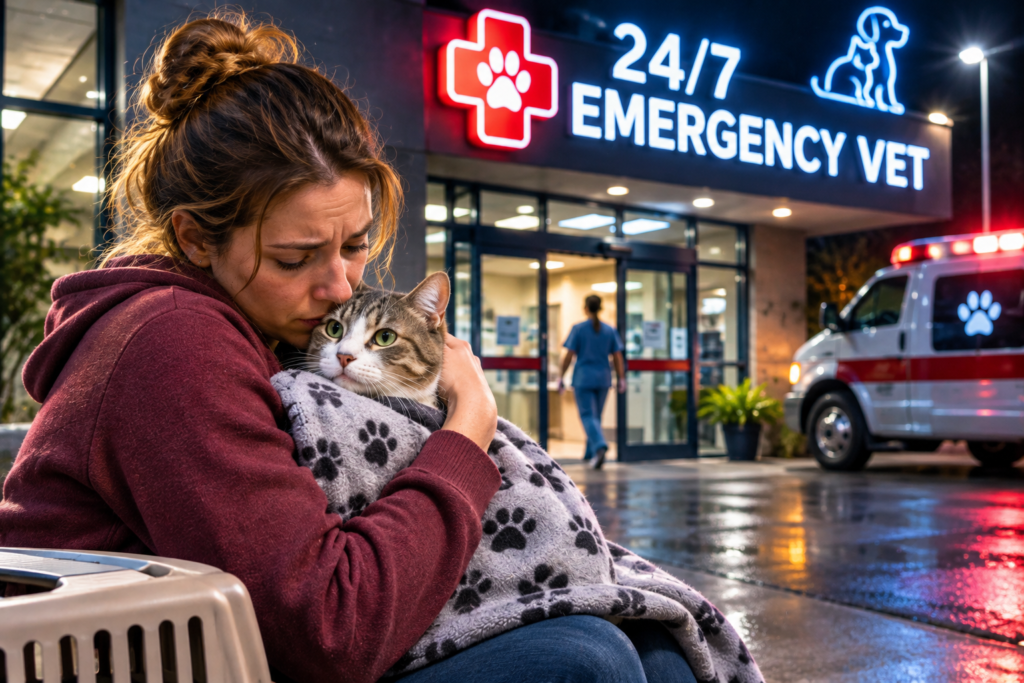
One of the most difficult decisions for pet parents is knowing whether their dog or cat needs immediate emergency treatment or can safely wait until the regular veterinarian opens.
Some symptoms may appear minor but can indicate a serious underlying medical condition.
Signs That Require Immediate Emergency Veterinary Care
Don’t wait until morning if your pet experiences any of these symptoms:
Difficulty breathing: Rapid, labored, or unusually noisy breathing can indicate a serious medical emergency.
Suspected poisoning: If your pet eats chocolate, medications, toxic plants, or household chemicals, contact a veterinarian immediately.
Severe bleeding: Uncontrolled bleeding or deep wounds require urgent veterinary attention.
Seizures: Ongoing seizures, repeated seizures, or seizures accompanied by loss of consciousness need immediate care.
Collapse or unconsciousness: Sudden collapse, extreme weakness, or unresponsiveness should never be ignored.
Urinary blockage: A cat, particularly a male cat, straining to urinate with little or no urine needs immediate veterinary attention.
Severe abdominal swelling: A swollen abdomen, especially with repeated unsuccessful attempts to vomit, can indicate a life-threatening condition.
If you notice any of these symptoms, contact the nearest emergency animal hospital and follow its instructions. If possible, call while traveling so the veterinary team can prepare.
When Might It Be Okay to Wait Until Morning?
Some mild symptoms may not require an immediate emergency hospital visit, provided your pet is otherwise behaving normally.
Examples include:
A single episode of vomiting, followed by normal behavior.
Mild itching without swelling or breathing problems.
A small, superficial scratch that has stopped bleeding.
Occasional sneezing without breathing difficulty.
Mild coughing without distress or worsening symptoms.
However, these are not automatic signs that waiting is safe. If symptoms persist, worsen, or you are unsure, call an emergency veterinarian for advice.
Pet parent’s tip: Never give human medication to your dog or cat without veterinary instructions. Some common human medicines can be dangerous or even fatal to pets.
Frequently Asked Questions (FAQs)
Here are answers to some common questions American pet parents ask about emergency veterinary services.
Many emergency veterinary hospitals require an examination fee or deposit before beginning non-emergency diagnostic procedures and treatment.
The exact payment policy depends on the hospital.
Some clinics may request an upfront deposit based on the estimated treatment cost, while others accept CareCredit, Scratchpay, or other approved payment methods.
If your pet needs emergency attention, call the clinic and ask about its payment policy. Don’t delay urgent care simply because you’re unsure about the payment arrangements.
Yes, many US pet insurance policies cover eligible after-hours emergency veterinary treatment.
Depending on your policy, covered expenses may include:
Emergency examinations.
Diagnostic tests.
X-rays and ultrasound.
Emergency medications.
Hospitalization.
Medically necessary surgery.
However, coverage varies between insurance providers and policies. Some plans exclude emergency examination fees, pre-existing conditions, or certain treatments.
Check your policy documents to understand the reimbursement percentage, deductible, exclusions, and waiting periods.
If you cannot afford an emergency vet bill, speak honestly with the veterinary hospital about your financial situation.
You can ask about:
A written treatment estimate and the most urgent medical priorities.
CareCredit or Scratchpay financing.
An in-house payment arrangement, if available.
Local animal welfare charities and veterinary assistance programs.
Veterinary teaching hospitals that may offer alternative treatment options.
Some non-profit organizations provide financial assistance for eligible emergency cases.
Most importantly, explain your budget before approving treatment so the veterinarian can discuss medically appropriate options.
It can be. Some emergency hospitals charge additional after-hours, weekend, or holiday fees.
However, many dedicated 24/7 emergency hospitals already include emergency staffing costs in their standard examination fee.
Call the clinic to confirm whether a separate nighttime surcharge applies.
According to CareCredit’s 2026 cost guide, average overnight hospitalization costs approximately $619 for dogs and $582 for cats per night at veterinary clinics.
The actual bill may be higher if your pet needs oxygen therapy, intensive monitoring, additional medications, or specialized treatment.
Ask whether the quoted amount includes nursing care, medications, monitoring, and follow-up examinations.
Final Thoughts: Be Prepared for Unexpected Emergency Vet Expenses
A nighttime veterinary emergency can be stressful for both pets and their owners. Along with worrying about your pet’s health, an unexpected bill can create additional financial pressure.
In 2026, emergency examination fees in the USA generally range from around $100 to $260, depending on the pet and location. Additional diagnostic tests, hospitalization, and surgery can significantly increase the final bill.
The best way to prepare is to consider pet insurance, maintain an emergency savings fund, and understand which payment options your local veterinary hospitals accept.
Most importantly, never delay necessary emergency treatment because you’re worried about the cost. Ask the veterinarian about the available treatment options and payment arrangements.
Your pet depends on you, and being financially and medically prepared can make a difficult situation a little easier.
