Sharing food with your dog can feel like one of the easiest ways to show affection. Those big, hopeful eyes under the kitchen table can make it very difficult to say no.
But not everything that’s safe for people is safe for dogs.
Some everyday human foods can cause serious illness in dogs, and a few can become life-threatening. That’s why every dog owner should know the most common foods poisonous to dogs, the symptoms to watch for, and what to do if an accidental ingestion happens.
In this guide, we’ll look at five important foods and ingredients that can be dangerous for dogs:
- Chocolate
- Grapes and raisins
- Onions, garlic, leeks and chives
- Xylitol
- Macadamia nuts
If you think your dog has eaten something potentially toxic, don’t wait for symptoms before getting professional advice. Contact your veterinarian, an emergency veterinary clinic, or an animal poison-control service.
Important: This article is for general education and isn’t a substitute for veterinary care. The seriousness of poisoning depends on factors such as the food, amount eaten, your dog’s size, and individual health.
Quick Answer: Are These Foods Poisonous to Dogs?
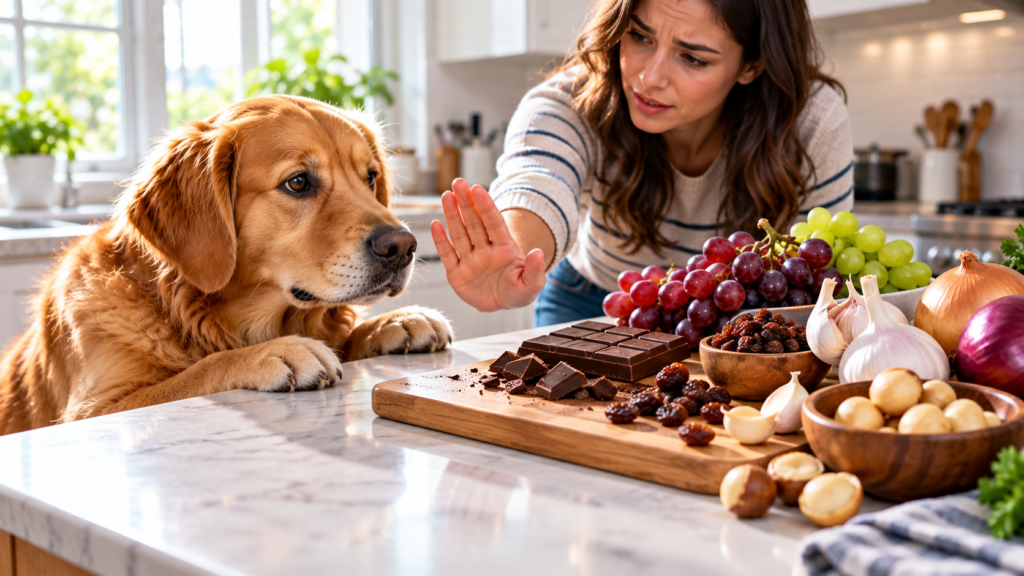
Some of the most important foods poisonous to dogs include:
| Food | Main Concern | Possible Effects |
|---|---|---|
| Chocolate | Theobromine & caffeine | Vomiting, abnormal heart rhythm, tremors, seizures |
| Grapes & raisins | Kidney toxicity | Vomiting, lethargy, kidney failure |
| Onions & garlic | Red blood cell damage | Anemia, weakness, pale gums |
| Xylitol | Rapid insulin release | Low blood sugar, seizures, liver injury |
| Macadamia nuts | Unknown toxic mechanism | Weakness, tremors, incoordination |
These foods are recognized as potential hazards for dogs by veterinary and animal-health organizations. ASPCA
1. Chocolate and Caffeinated Products
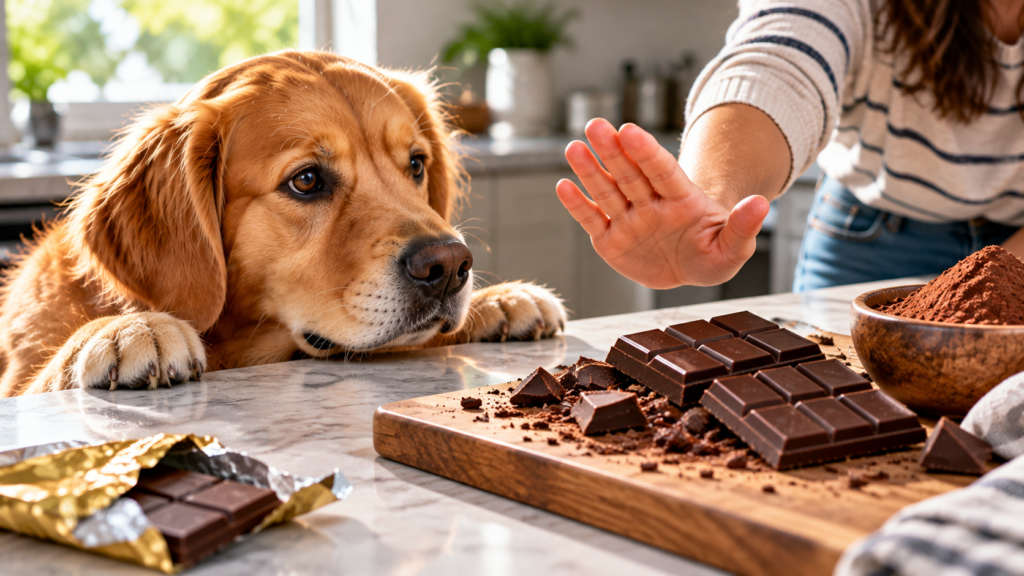
Chocolate is probably the food most dog owners already know to avoid. Unfortunately, dogs can still accidentally eat chocolate from countertops, purses, baking ingredients, or unattended desserts.
Why Is Chocolate Dangerous for Dogs?
Chocolate contains methylxanthines, particularly theobromine and caffeine. Dogs process these compounds differently from humans, and higher concentrations can cause serious problems.
The risk generally increases as the chocolate becomes darker and contains more cocoa. Cocoa powder and baking chocolate can contain particularly high concentrations, while white chocolate contains much less theobromine. ASPCA
Possible Symptoms
A dog that eats a toxic amount of chocolate may develop:
- Vomiting or diarrhea
- Restlessness or hyperactivity
- Excessive thirst or urination
- Panting
- Abnormal heart rhythm
- Muscle tremors
- Seizures in severe cases
The amount and type of chocolate matter, so don’t assume that a small-looking piece is automatically safe.
What Should You Do?
If your dog eats chocolate, save the packaging if possible. Note the type of chocolate, approximate amount, and when your dog ate it.
Then contact your veterinarian or an animal poison-control service for guidance.
Don’t attempt to make your dog vomit unless a veterinary professional specifically tells you to do so.
2. Grapes and Raisins
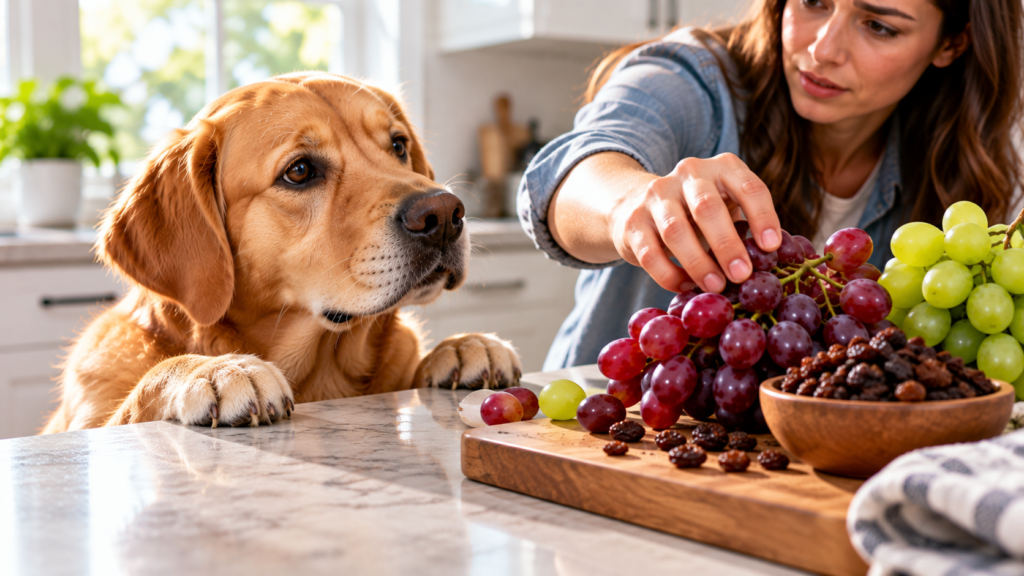
Grapes and raisins are another important example of foods poisonous to dogs.
This one surprises many pet owners because grapes seem like a healthy snack for humans.
Why Are Grapes Dangerous?
Grape and raisin ingestion has been associated with acute kidney injury and kidney failure in dogs.
Researchers have proposed tartaric acid as the toxic component, but the amount of tartaric acid can vary between fruits, making the response unpredictable. Merck Veterinary Manual
Because individual sensitivity can vary, it’s safest to treat any grape or raisin ingestion as a potential emergency.
Warning Signs
Possible symptoms include:
- Vomiting
- Diarrhea
- Loss of appetite
- Lethargy
- Abdominal discomfort
- Excessive thirst
- Weakness
- Reduced urine production
Vomiting and diarrhea may occur within several hours, while kidney problems can develop later. Merck Veterinary Manual
What Should You Do?
If your dog eats grapes, raisins, or foods containing them, contact your veterinarian promptly—even if your dog currently looks completely normal.
Don’t wait for kidney-related symptoms to appear.
3. Onions, Garlic, Leeks, and Chives (Allium Family)
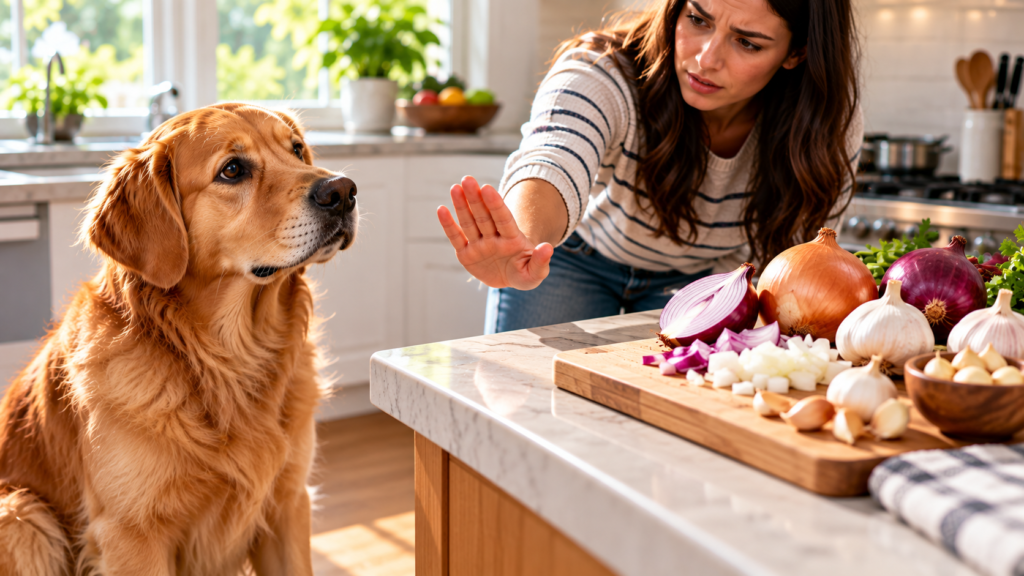
Onions and garlic may seem harmless because they’re common ingredients in human cooking.
For dogs, however, they’re foods that should be avoided.
Onions, garlic, leeks and chives belong to the Allium family.
Why Are They Dangerous?
Allium plants can irritate the gastrointestinal system and damage red blood cells. Significant exposure can lead to anemia.
This applies to different forms of these ingredients, including fresh, cooked, dried and powdered forms. ASPCA
That means dog owners should pay attention to ingredient labels on human foods.
Garlic powder and onion powder can be particularly easy to overlook because they may be included in sauces, seasonings, soups and processed foods.
Possible Symptoms
Signs can include:
- Vomiting
- Diarrhea
- Loss of appetite
- Weakness
- Pale gums
- Dark-colored urine
- Rapid breathing
- Increased heart rate
Some effects may not become obvious immediately, so a dog that initially appears normal may still require veterinary evaluation.
A Simple Rule
Don’t share seasoned human food with your dog unless you know every ingredient is dog-safe.
4. Xylitol (Birch Bark Extract / Wood Sugar)
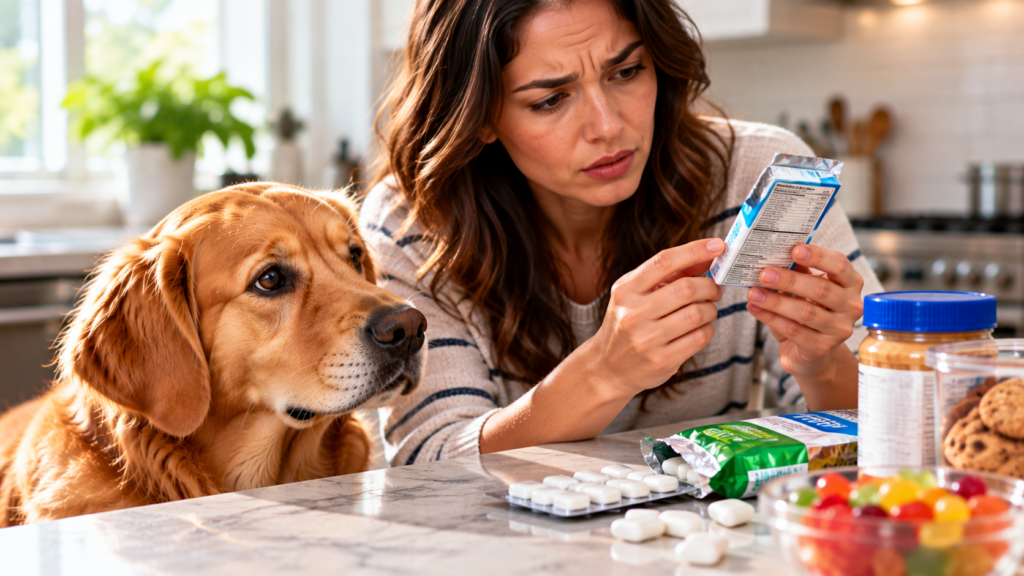
Xylitol is a popular zero-calorie sugar substitute found in thousands of household pantry items.
Where It Hides:
Sugar-free chewing gum and breath mints
Low-calorie peanut butter brands
Chewable vitamins and dietary supplements
Sugar-free baked goods and dental rinses
Why It Is Dangerous:
When a dog eats xylitol, their pancreas mistakes it for real glucose and releases an overwhelming surge of insulin. This results in profound hypoglycemia (a severe, life-threatening crash in blood sugar) within 15 to 45 minutes. At higher doses, xylitol can lead to acute liver necrosis and liver failure.
Common Symptoms:
Sudden stumbling, uncoordinated movements, or drunken walking
Extreme disorientation and glazed eyes
Involuntary muscle twitching and seizures
Coma
5. Macadamia Nuts
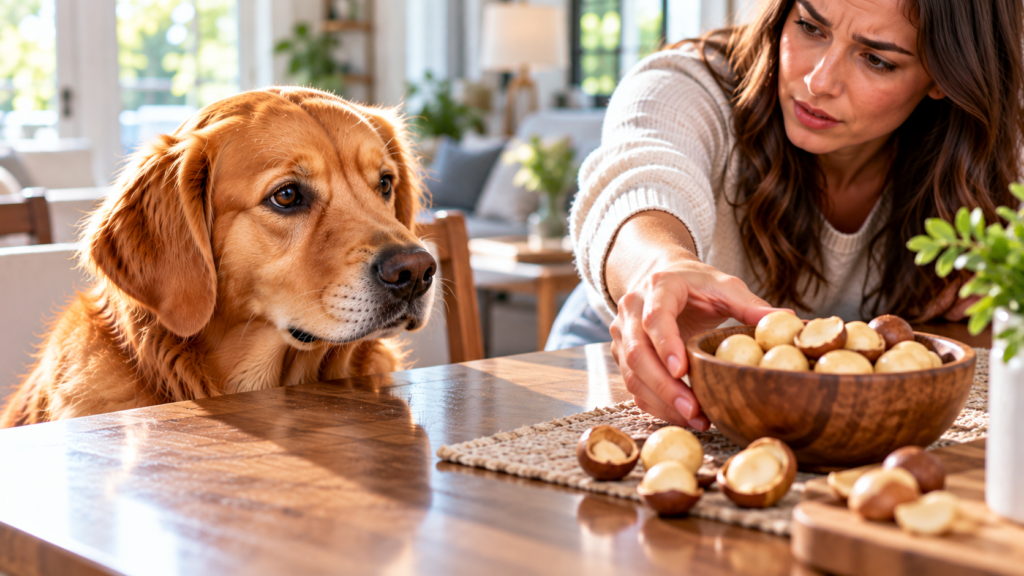
Macadamia nuts may seem like an ordinary snack, but they are among the foods poisonous to dogs.
The exact mechanism behind macadamia nut toxicity isn’t fully understood.
What Can Happen?
Dogs that eat macadamia nuts may develop:
- Weakness
- Difficulty walking
- Lack of coordination
- Vomiting
- Tremors
- Depression
- Increased body temperature
According to the ASPCA, signs can appear within about 12 hours, and most affected dogs recover within 24–72 hours with appropriate care. ASPCA
Merck Veterinary Manual also identifies weakness, incoordination, vomiting, tremors and increased body temperature as possible signs. Merck Veterinary Manual
What Should You Do?
Don’t wait for symptoms if you know your dog has eaten macadamia nuts.
Contact your veterinarian for advice about what to do next.
Foods Poisonous to Dogs: Quick Comparison
| Food | Main Toxic Concern | Warning Signs |
|---|---|---|
| Chocolate | Theobromine & caffeine | Vomiting, panting, abnormal heart rhythm, tremors |
| Grapes & raisins | Kidney injury | Vomiting, lethargy, increased thirst, reduced urination |
| Onions & garlic | Red blood cell damage | Weakness, pale gums, dark urine |
| Xylitol | Low blood sugar & possible liver injury | Weakness, collapse, seizures |
| Macadamia nuts | Neurologic/musculoskeletal effects | Weakness, incoordination, tremors |
Emergency Steps: What to Do If Your Dog Ate Something Poisonous
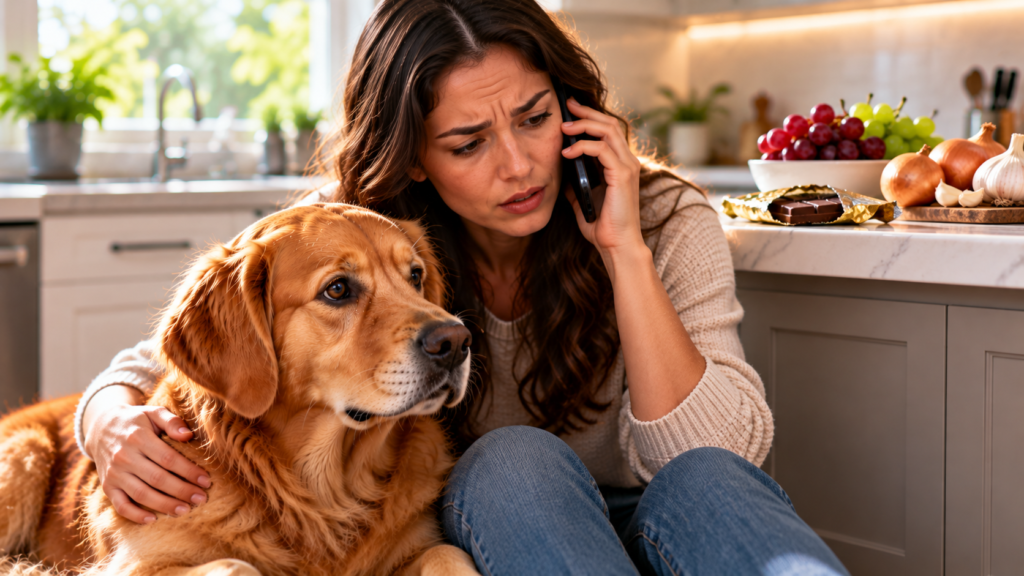
If you suspect your dog has eaten one of these foods poisonous to dogs, try not to panic.
Follow these steps.
1. Remove the Food
Immediately take away any remaining food, packaging or leftovers.
Make sure other pets cannot reach the same food.
2. Identify What Your Dog Ate
Try to determine:
- What food was eaten?
- Approximately how much?
- When did your dog eat it?
- Was it raw, cooked or processed?
- What ingredients were included?
Keep the original packaging if you have it.
3. Don’t Induce Vomiting on Your Own
This is extremely important.
Don’t give your dog hydrogen peroxide, salt, or other home remedies unless a veterinarian specifically instructs you to do so.
The safest response depends on the substance, amount, timing and condition of the dog.
4. Contact a Professional
In the United States, you can contact:
ASPCA Animal Poison Control Center:
(888) 426-4435
Pet Poison Helpline:
(855) 764-7661
You can also contact your regular veterinarian or the nearest emergency veterinary hospital.
5. Seek Emergency Care for Serious Symptoms
Go to an emergency veterinary hospital immediately if your dog is experiencing symptoms such as:
- Collapse
- Seizures
- Difficulty breathing
- Severe weakness
- Loss of consciousness
- Severe tremors
Can Dogs Recover From Food Poisoning?
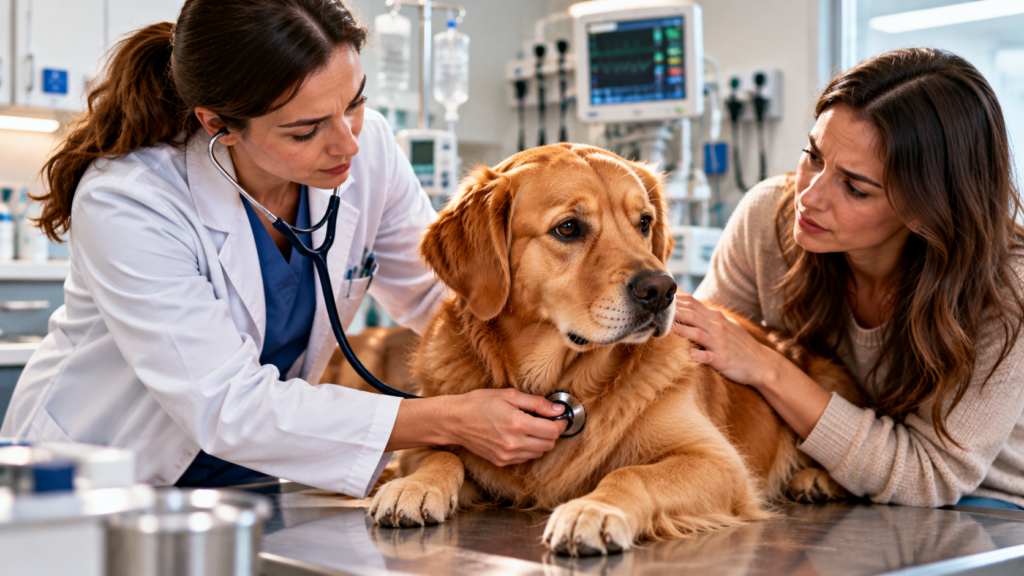
Yes, many dogs can recover successfully when treatment is started promptly.
However, the outcome depends on the toxin, amount consumed, how quickly treatment begins, and the dog’s overall health.
Some poisonings may require vomiting to be induced by a professional, activated charcoal, intravenous fluids, blood-glucose monitoring, medication or hospitalization.
That’s why early professional advice is so important.
How Can You Prevent Food Poisoning in Dogs?
Prevention is much easier than dealing with an emergency.
Here are some simple habits every dog owner can follow:
Keep Dangerous Foods Out of Reach
Don’t leave chocolate, grapes, raisins, sugar-free gum or other potentially dangerous foods on countertops where your dog can reach them.
Check Ingredient Labels
Look carefully for xylitol, especially in sugar-free products, nut butters, candy, baked goods and dental products.
Be Careful With Leftovers
Human leftovers may contain onion, garlic, sauces, spices or other ingredients that aren’t appropriate for dogs.
Secure the Trash
Dogs are natural scavengers. A closed, secure trash can can prevent many accidental poisonings.
Teach Family Members
Make sure children and guests know which foods should never be given to your dog.
What Human Foods Are Safe for Dogs?
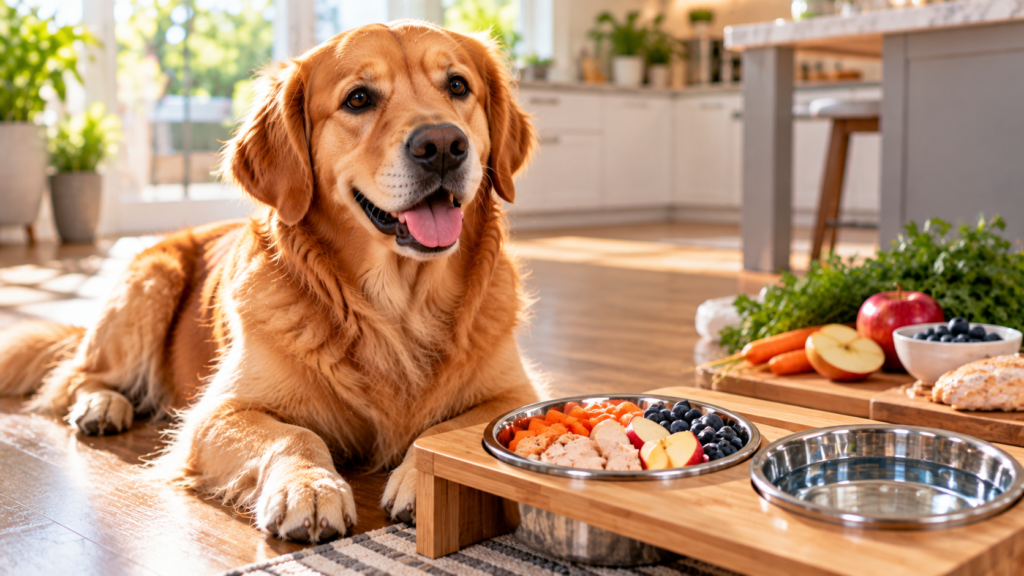
Not every human food is dangerous.
Some plain foods can be appropriate as occasional treats for many dogs, including:
- Carrots
- Blueberries
- Plain cooked chicken
- Plain pumpkin
- Small amounts of apple without seeds or core
However, preparation matters. Avoid seasonings, sauces, artificial sweeteners, excessive salt and other potentially harmful ingredients.
If your dog has a medical condition or special diet, ask your veterinarian before introducing new foods.
Frequently Asked Questions (FAQ)
Yes, most dogs make a full recovery if treated promptly by a veterinarian. Early intervention allows the vet to induce vomiting safely, administer medical-grade activated charcoal to trap toxins, or provide intravenous (IV) fluids to support organ function.
It depends entirely on the dog’s body weight and the type of chocolate. While a single milk chocolate chip may only cause mild stomach upset in a large 70-pound Labrador, just half an ounce of pure baker’s chocolate can prove lethal to a 10-pound Chihuahua
Healthy dog-safe human foods include plain raw carrots, deseeded apple slices (without cores or seeds), fresh blueberries, plain cooked chicken (without onions or garlic), and canned pure pumpkin (no spices or artificial sweeteners).
Some of the most important foods and ingredients to keep away from dogs include chocolate, grapes, raisins, onions, garlic, xylitol-containing products and macadamia nuts. Other foods and substances can also be dangerous, so when in doubt, contact a veterinarian or poison-control service.
Remove the remaining chocolate, keep the packaging, estimate how much was eaten and contact your veterinarian or animal poison-control service. The type and amount of chocolate and your dog’s size all matter.
Grape and raisin toxicity is unpredictable. Because kidney injury can occur in some dogs, it’s safest to contact your veterinarian promptly after any known ingestion rather than trying to determine a “safe” amount yourself.
Garlic can be harmful to dogs and belongs to the Allium family, along with onions, leeks and chives. These foods can cause gastrointestinal irritation and red blood cell damage.
Yes. Xylitol can cause a rapid drop in blood sugar and can potentially cause severe liver injury. Suspected xylitol ingestion requires prompt veterinary attention
Macadamia nuts should not be given to dogs. They can cause weakness, incoordination, vomiting, tremors and increased body temperature. ASPCA
Final Thoughts
Knowing which foods are poisonous to dogs can help you prevent a frightening and potentially expensive emergency.
Chocolate, grapes and raisins, onions and garlic, xylitol, and macadamia nuts are five important hazards to keep away from your dog. But remember that these aren’t the only things that can make pets sick.
The safest approach is simple: when you’re unsure whether your dog ate something dangerous, don’t wait for symptoms. Get professional advice.
Your dog may not understand which foods are dangerous—but you can make sure those foods stay out of paw’s reach.
A few seconds of prevention can protect your dog’s health for years to come.
