You’re sitting on the couch, gently petting your cat. Everything seems peaceful. Your cat is purring, its eyes are half-closed, and it looks completely relaxed.
Then, out of nowhere, it turns around and bites your hand!
If this sounds familiar, you’re probably wondering: Why does my cat bite me when I’m just trying to show it love?
The good news is that your cat probably isn’t biting you simply because it dislikes you. Cats bite for several reasons, including play, overstimulation, fear, frustration, and sometimes physical discomfort.
The tricky part is understanding what your cat is trying to communicate.
In this guide, we’ll explore 10 common reasons why cats bite their owners, how to recognize the warning signs, and what you can do to prevent unwanted biting. Whether you have a playful kitten or an adult indoor cat, these tips can help you understand your furry friend a little better.
Quick Answer: Why Does My Cat Bite Me?
Your cat may bite you because it is:
Playing and expressing its natural hunting instincts.
Becoming overstimulated during petting.
Feeling frightened, stressed, or threatened.
Trying to communicate that it wants space.
Bored and looking for stimulation.
Experiencing pain or discomfort.
Reacting to another animal or an upsetting situation.
Responding to a behavior it learned as a kitten.
The important thing to remember: Context matters. A gentle nibble during play is different from a sudden, painful bite when you touch your cat.
Let’s look at each reason in more detail.
1. Your Cat Is Playing With You
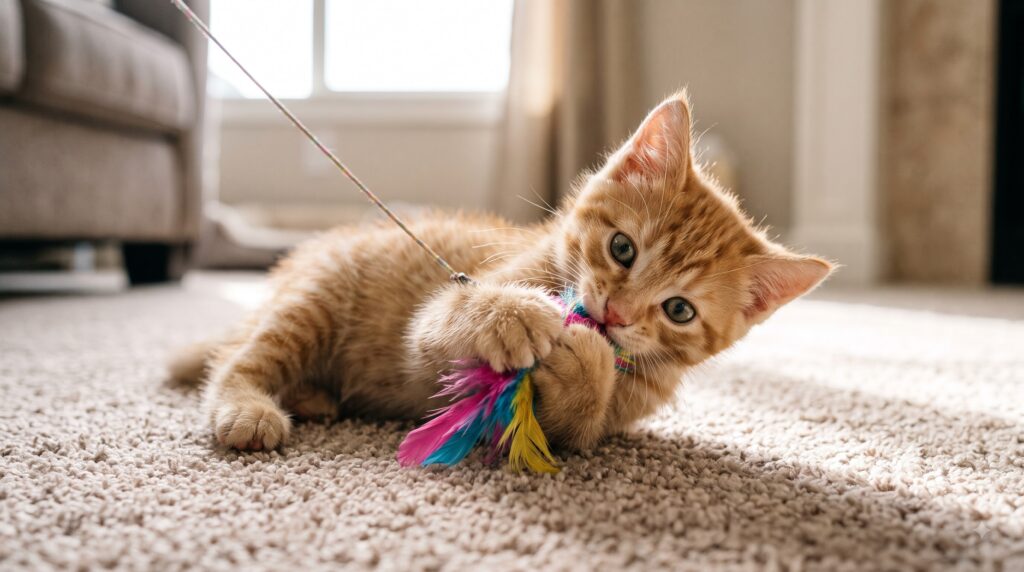
One of the most common reasons cats bite is simple: they’re playing!
Cats are natural hunters. Even though your indoor cat gets its meals from a food bowl, it still has instincts to stalk, chase, pounce, grab, and bite.
Have you ever noticed your cat hiding behind a sofa before suddenly jumping at your feet? That’s often play-related hunting behavior.
Kittens are especially likely to chase moving fingers, hands, and toes because they find movement exciting.
Signs your cat may be play-biting:
It chases your moving hands or feet.
It hides before jumping out.
It grabs your hand with its paws.
It bites during an energetic play session.
It quickly returns to playing.
How to stop it:
Instead of using your hands as toys, give your cat something appropriate to chase and bite.
Try:
Feather wand toys.
Toy mice.
Soft kicker toys.
Interactive cat toys.
Puzzle feeders.
A few short interactive play sessions throughout the day can give your cat a healthy outlet for its energy.
2. Your Cat Gets Tired of Being Petted
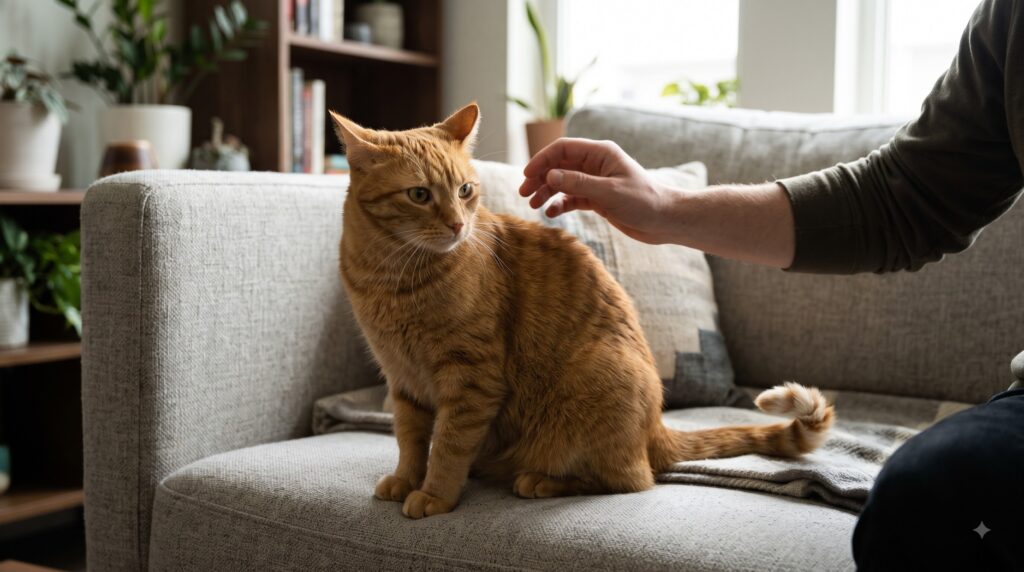
Does your cat enjoy being petted one minute and bite you the next?
This can happen because of something called petting-induced aggression, also known as petting intolerance.
Some cats enjoy attention but have a limit. After a certain amount of touching, petting may become uncomfortable or overwhelming.
For example, your cat might happily accept a few strokes along its back but become irritated when you continue.
Watch for these warning signs:
Its tail starts flicking or swishing.
Its ears move sideways or backward.
Its body becomes tense.
Its skin twitches.
It suddenly turns its head toward your hand.
It tries to move away.
What should you do?
Stop petting as soon as you notice these signals. Give your cat a little space and let it decide when it wants attention again.
A helpful tip is to keep petting sessions short, especially if your cat has a history of biting during cuddles.
3. Your Cat Is Trying to Tell You to Stop
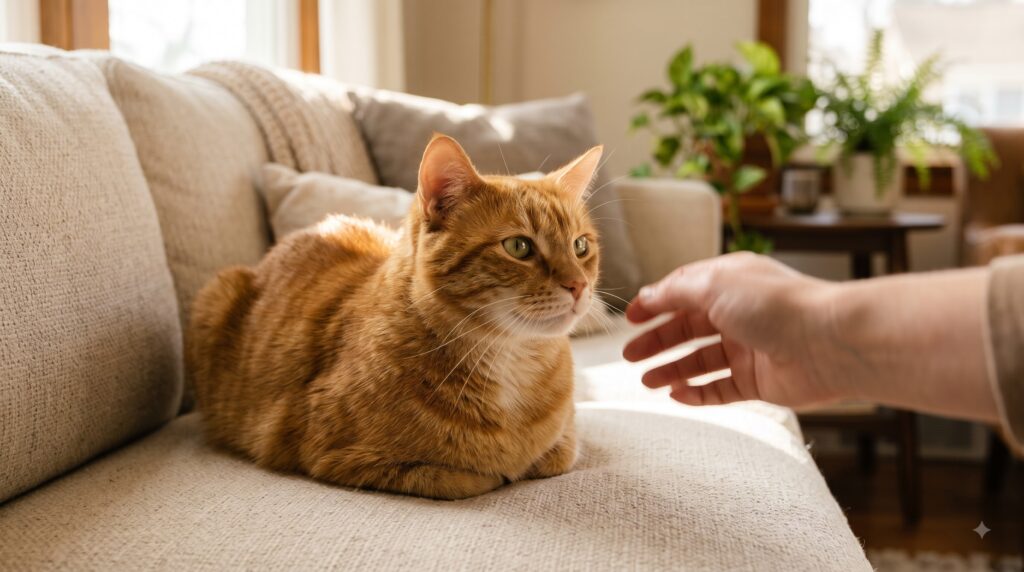
Sometimes, a cat bites because it wants you to understand something.
Cats communicate through their body language, sounds, and behavior. A bite may be a warning that your cat doesn’t want to be touched, picked up, or disturbed.
Imagine your cat is sleeping peacefully. You approach and start hugging it. Even if you mean well, your cat may not appreciate the interruption.
It may hiss, move away, or bite to make its boundaries clear.
How to respond:
Avoid forcing hugs or cuddles.
Let your cat approach you first.
Respect its resting and hiding spaces.
Stop touching it when it moves away.
Avoid disturbing it while sleeping or eating.
Remember, a cat that enjoys your company doesn’t necessarily enjoy being touched all the time.
4. Your Cat Is Feeling Scared or Threatened
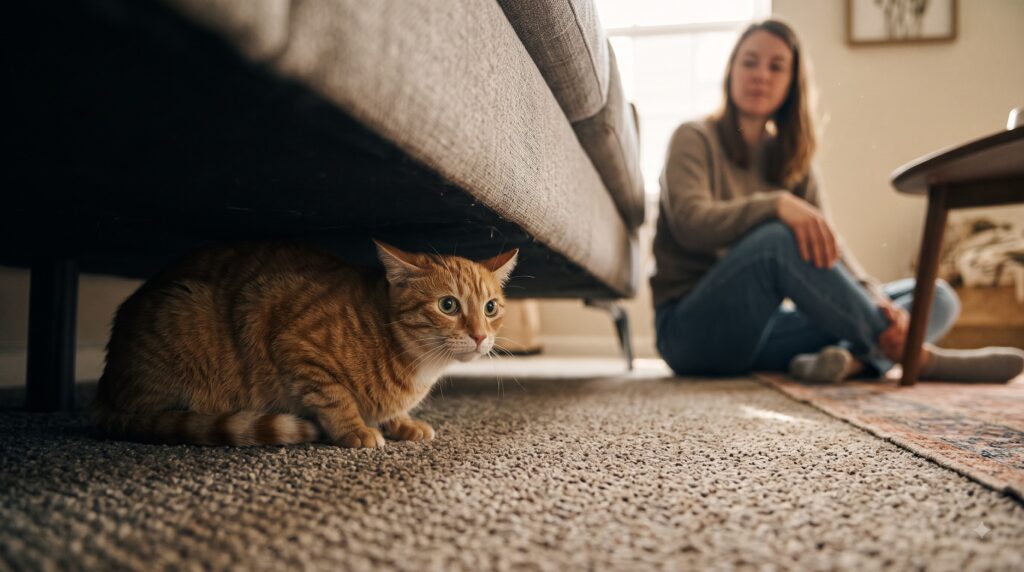
Fear is another common reason behind cat biting.
Cats may bite when they feel unsafe, trapped, or threatened. New visitors, unfamiliar pets, loud noises, and sudden movements can trigger a defensive reaction.
For example, if a stranger tries to pick up a frightened cat, the cat may scratch or bite because it wants to escape.
Common signs of fear include:
Flattened ears.
Hissing or growling.
A crouched body position.
Dilated pupils.
Hiding under furniture.
Trying to run away.
How to help a frightened cat:
Give your cat a quiet, safe place where it can hide and relax.
Don’t chase it, corner it, or force physical contact. Let it approach people at its own pace.
Patience and a predictable environment can help a nervous cat feel more secure.
5. Your Cat Is Bored and Has Too Much Energy
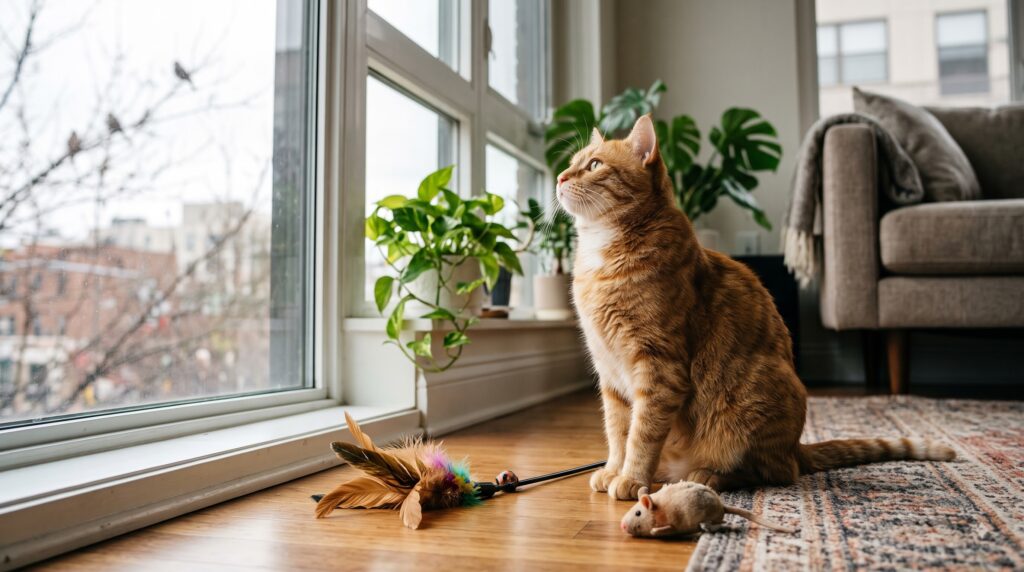
Indoor cats need more than food, water, and a comfortable place to sleep.
They also need opportunities to explore, climb, chase, play, and use their natural instincts.
When a cat doesn’t receive enough physical and mental stimulation, it may start chasing ankles, attacking moving feet, or biting during interactions.
This doesn’t mean your cat is being naughty. It may simply need more activities.
Try these indoor enrichment ideas:
Install a sturdy cat tree.
Offer interactive feather toys.
Use puzzle feeders.
Rotate toys to maintain interest.
Create comfortable window-watching spots.
Schedule regular play sessions.
Even a little extra playtime can make your cat’s daily routine more interesting.
6. Your Cat May Be Experiencing Pain
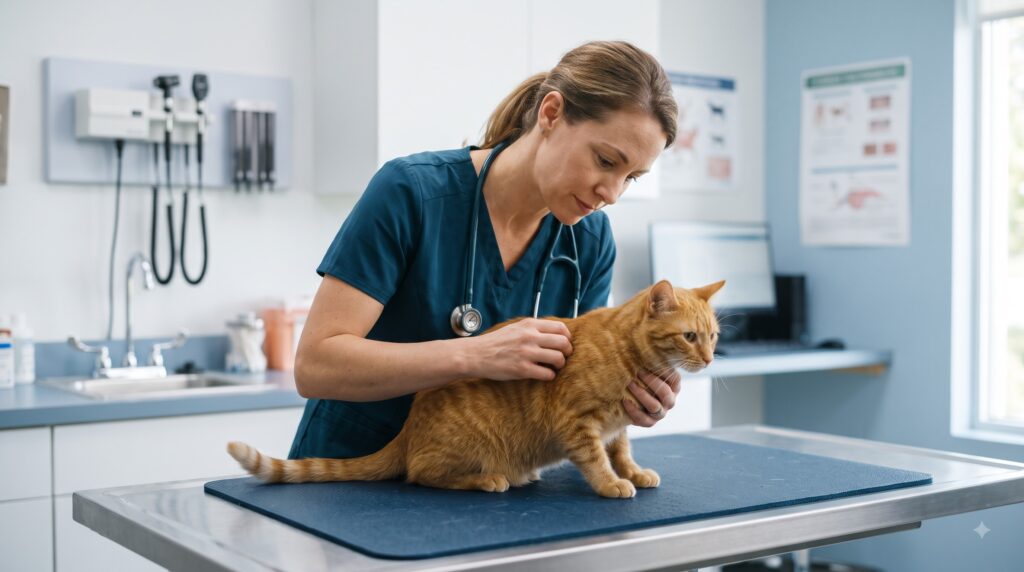
This is one reason you should never ignore sudden changes in biting behavior.
A normally gentle cat may start biting when touched if it is experiencing pain or discomfort.
Possible causes include:
Dental problems.
Arthritis.
Skin irritation.
Injuries.
Other underlying medical conditions.
For example, if your cat suddenly bites whenever you touch its back, legs, or mouth, it may be trying to protect a painful area.
What should you do?
If your cat starts biting unexpectedly, becomes sensitive to touch, or shows other changes in behavior, arrange a veterinary examination.
Don’t assume that sudden aggression is simply a training problem.
A veterinarian can help identify whether a medical condition is contributing to the behavior.
7. Your Cat Is Redirecting Its Frustration
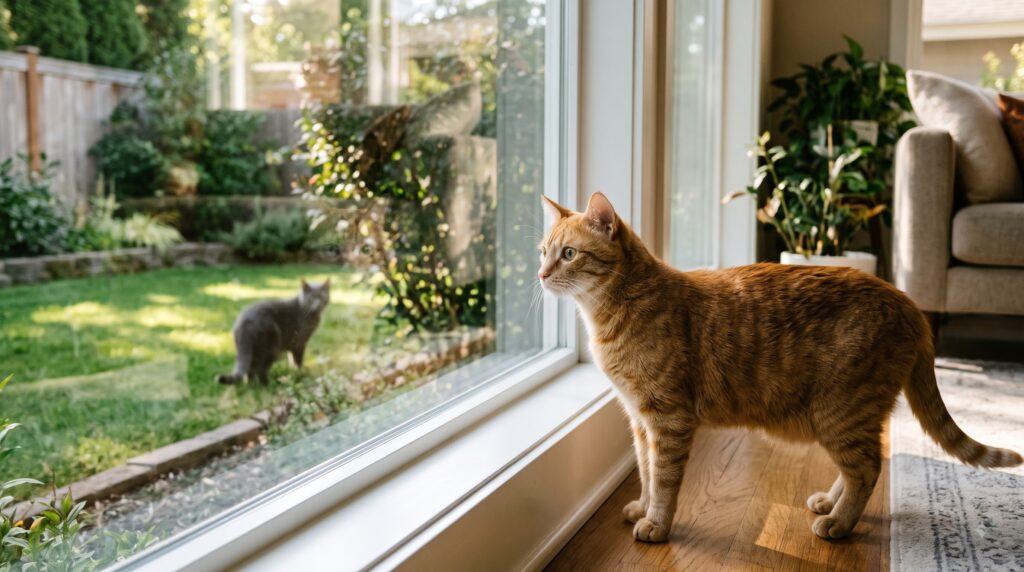
Have you ever seen your indoor cat staring intensely at another cat outside the window?
Your cat may become highly excited, frustrated, or distressed because it cannot reach the animal.
Sometimes, that emotional reaction can be redirected toward a nearby person or pet. This is known as redirected aggression.
For example, your cat may be watching another cat outside. When you approach or try to touch it, it suddenly bites your hand.
How to handle this situation:
Don’t approach or touch an agitated cat.
Give it time and space to calm down.
Reduce visual access to stressful triggers if necessary.
Avoid forcing interaction.
Ask your veterinarian for help if the behavior continues.
Trying to pick up an agitated cat can make the situation worse.
8. Your Cat Learned to Bite During Kittenhood
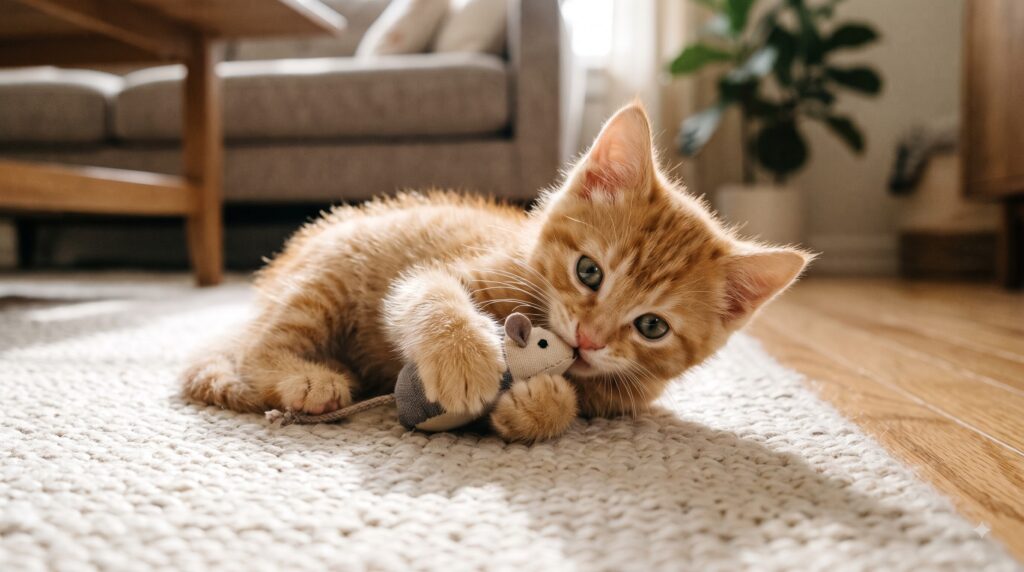
Some cats develop biting habits because they were encouraged to play with human hands when they were young.
It may seem harmless when a tiny kitten gently bites your fingers. However, the same behavior can become painful as the kitten grows.
Kittens need to learn appropriate play behavior.
If your cat regularly bites your hands, try changing the way you interact with it.
Helpful habits:
Never encourage hand wrestling.
Use toys instead of fingers.
Stop play when biting begins.
Reward gentle interactions.
Keep play sessions positive and consistent.
Avoid shouting or physically punishing your cat. Fear-based responses can damage trust and may make behavior problems worse.
9. Your Cat Doesn't Like Being Picked Up
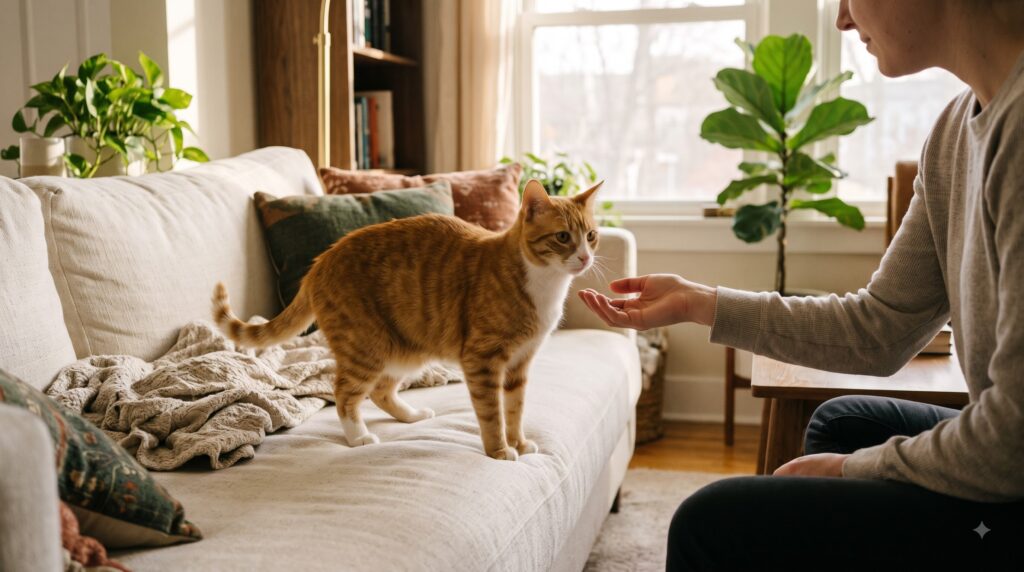
Not every cat enjoys being carried or held.
Some cats love sitting beside their owners but become uncomfortable when someone lifts them.
Your cat may bite when you pick it up without warning, hold it too tightly, or prevent it from moving away.
How to make your cat more comfortable:
Approach calmly.
Allow your cat to sniff your hand.
Avoid sudden movements.
Support its body properly when lifting is necessary.
Put it down if it becomes uncomfortable.
Most importantly, don’t force your cat to enjoy being carried. Some cats simply prefer showing affection in other ways.
10. Your Cat May Be Giving You a Gentle Nibble
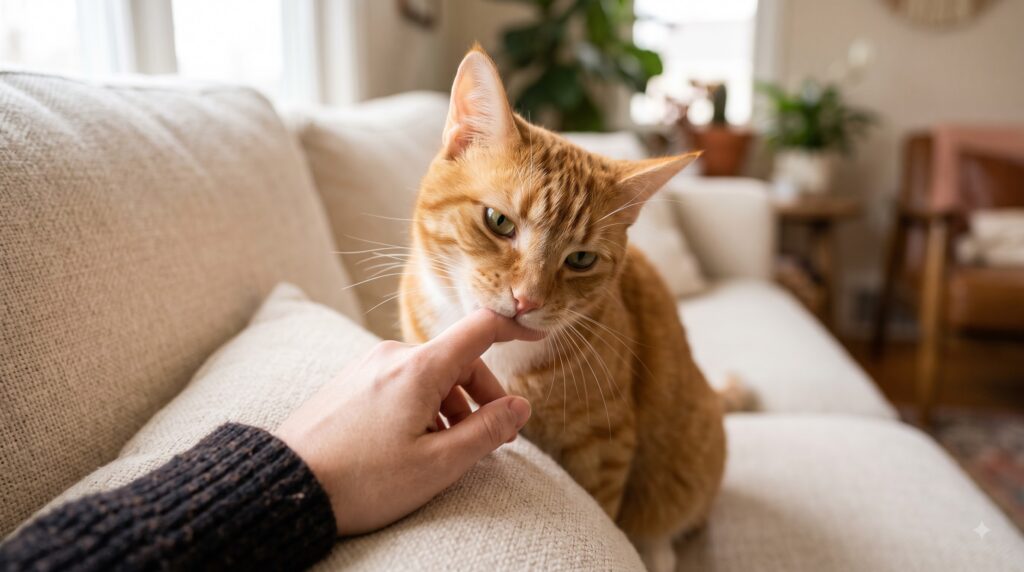
You’ve probably heard people talk about cat love bites.
Some cats give gentle, controlled nibbles during social interaction, play, or grooming-like behavior.
For example, your cat may lick your hand and then gently nibble it.
However, it’s important not to assume that every gentle bite means affection.
Look at the entire situation.
Is your cat relaxed and voluntarily approaching you? Or is it tense, moving away, and showing signs of discomfort?
Understanding your cat’s overall body language is much more helpful than judging a bite by itself.
How to Stop Your Cat From Biting You: 7 Practical Tips
Now that you understand some common reasons behind cat biting, let’s look at ways to reduce unwanted behavior.
1. Stop Using Your Hands as Toys
Never encourage your cat to chase or bite your fingers. Use wand toys, toy mice, and other suitable toys instead.
2. Learn Your Cat’s Warning Signs
Watch its tail, ears, eyes, and body posture. Stop interacting when you notice signs of discomfort.
3. Keep Petting Sessions Short
Some cats enjoy only a little physical contact. Give your cat breaks and let it choose whether to continue.
4. Provide Daily Interactive Play
Offer regular opportunities to chase, stalk, and pounce on appropriate toys.
5. Avoid Physical Punishment
Hitting, shouting, spraying water, or frightening your cat can increase stress and damage trust. Focus on redirection and positive reinforcement instead.
6. Identify What Triggers the Biting
Notice when the biting happens. Does it occur during petting, play, grooming, or when you pick up your cat?
Understanding the trigger makes it easier to choose the right solution.
7. Visit a Veterinarian When Necessary
If your cat suddenly starts biting, appears painful, or shows a major behavior change, consult your veterinarian.
A medical examination is especially important when the behavior is new or unexplained.
Cat Biting Behavior: What Different Situations May Mean
| Situation | Possible explanation | What you can do |
|---|---|---|
| Biting during play | Hunting and play instincts | Redirect to toys |
| Biting during petting | Overstimulation | Stop petting and give space |
| Biting when frightened | Defensive behavior | Provide a safe hiding place |
| Biting when picked up | Discomfort or handling sensitivity | Avoid forced handling |
| Sudden biting | Possible pain or illness | Contact a veterinarian |
| Biting after seeing another cat | Possible redirected aggression | Allow time to calm down |
| Gentle nibbling | Social interaction or play | Consider the full body language |
These are possible explanations, not a way to diagnose your cat. The same behavior can have different causes depending on the circumstances.
What to Do If Your Cat Bites You and Breaks the Skin
This is an important safety issue for every cat owner.
Cat teeth are sharp and can create deep puncture wounds. Even a small-looking bite can become infected.
If your cat bites you and breaks your skin:
Wash the wound immediately with soap and running water.
Seek prompt medical advice, especially for puncture wounds or bites on the hands, face, or near a joint.
Ask a healthcare professional whether you need a tetanus booster or rabies assessment.
Watch for increasing redness, swelling, warmth, pain, or discharge.
Don’t wait for an infection to become severe before seeking help.
If the cat is unfamiliar, unvaccinated, or its vaccination status is unknown, mention this to the healthcare professional.
Frequently Asked Questions About Cat Biting
A gentle nibble may occur during play, social interaction, or grooming-like behavior. However, it can also be a way of communicating that your cat wants the interaction to stop. Look at its body language before deciding what the bite means.
Your cat may be experiencing petting-induced overstimulation. Some cats enjoy being petted only for a short time. Tail flicking, tense muscles, and ears turning backward can indicate that your cat needs a break.
Some cats alternate between licking and gentle mouthing during social interaction or play. It doesn’t always mean the bite is an expression of love. Pay attention to the situation and your cat’s comfort level.
Your cat may have learned to play with your hands, may react differently to your movements, or may feel more comfortable setting boundaries with you. Look for patterns in when the biting occurs.
Moving feet can trigger a cat’s chasing and hunting instincts. Try providing more interactive play and redirecting attention toward suitable toys.
No. Physical punishment can increase fear and stress. Instead, identify the trigger, redirect biting toward toys, reward calm behavior, and seek professional advice when necessary.
Sometimes biting is associated with fear, frustration, or defensive behavior. However, play, overstimulation, and pain can also cause biting. The circumstances and body language matter.
Some kittens become less mouthy as they mature, but unwanted biting can continue if the behavior is repeatedly encouraged. Consistent, positive training and appropriate play can help.
Understand Your Cat Before Reacting

So, why does your cat bite you?
It could be playing, feeling overstimulated, trying to communicate, feeling frightened, or experiencing physical discomfort.
The key is to look beyond the bite and understand what happened just before it.
Pay attention to your cat’s body language, respect its boundaries, provide regular play opportunities, and never ignore sudden changes in behavior.
Remember, building a trusting relationship with your cat takes patience. The better you understand your feline companion, the easier it becomes to recognize what it needs.
Now we’d love to hear from you!
Does your cat bite your hand during play, or does it suddenly bite while you’re petting it?
Share your experience in the comments.
For more helpful cat behavior tips, pet care guides, and advice for responsible pet owners, explore AllPetCaretaker.com.
