Living Alone? The Right Cat Can Make Home Feel Different
Living alone has its advantages: your own schedule, your own space, and plenty of peace and quiet. But coming home to a cat waiting at the door, curling up beside you, or simply following you from room to room can make that space feel much more alive.
The challenge is finding a cat whose personality fits your lifestyle.
Some cats want frequent human interaction, while others are more comfortable entertaining themselves for part of the day. Breed tendencies can provide a useful starting point, but every individual cat has its own personality.
Here are seven breeds worth considering if you live alone.
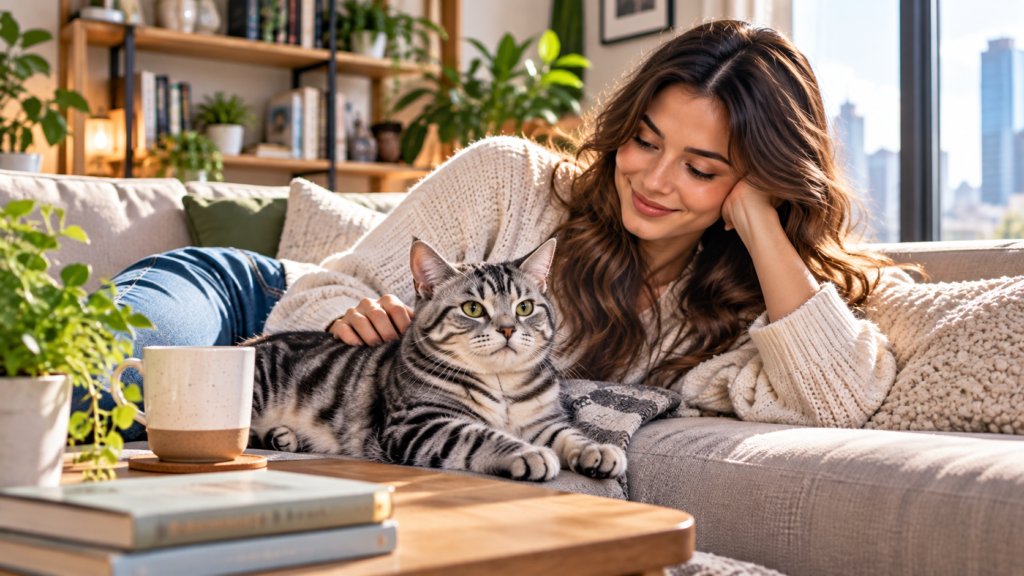
1. American Shorthair
A beautiful American Shorthair cat
The American Shorthair is an especially logical place to start. TICA describes the breed as highly adaptable and specifically notes that it can fit households ranging from a person living alone to families with children.
They tend to combine affection with a degree of independence, which can work well for someone who wants companionship without having a cat demanding attention every minute.
Why it may suit solo living: adaptable, playful and relatively easygoing.
Best for:First-time cat owners and people looking for an all-around companion.
2. Russian Blue
An elegant Russian Blue cat
If you prefer a quieter home, the Russian Blue deserves serious consideration.
Russian Blues tend to form close relationships with their family while also enjoying some alone time. TICA notes that they can be content at home alone and then interact with their humans when they return, and describes them as well suited to apartment living.
They’re also intelligent, so puzzle toys, climbing spaces and interactive play can help keep them stimulated.
Why it may suit solo living: affectionate without necessarily requiring constant interaction.
Best for: Apartment dwellers and people who appreciate a quieter companion.
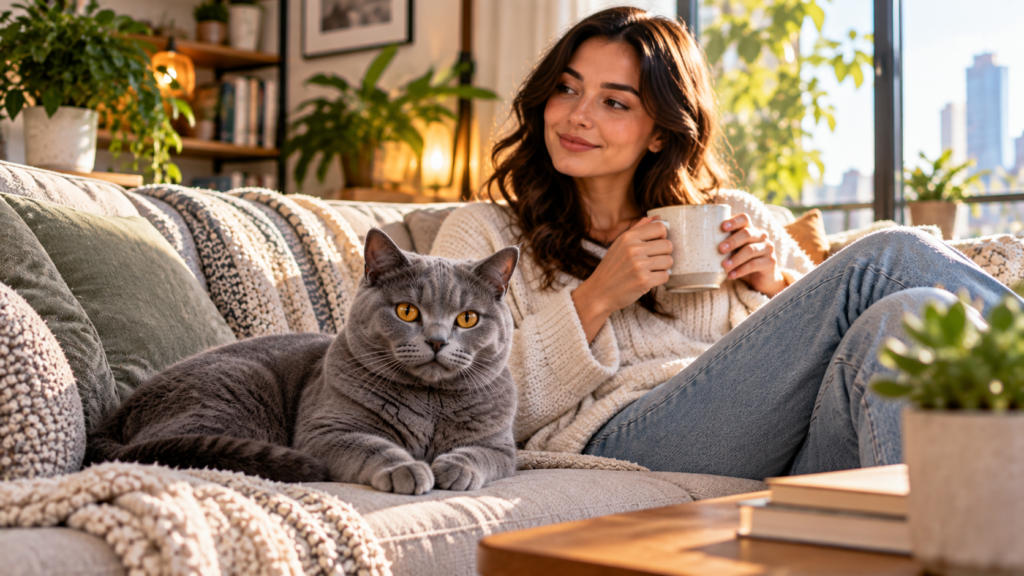
3. British Shorthair
A charming British Shorthair cat
Want a cat that enjoys your company but doesn’t necessarily need to sit on your lap all day?
The British Shorthair may fit that description.
TICA characterizes the breed as calm and independent. They can be affectionate and devoted while often preferring to sit beside their person rather than constantly demanding physical attention.
That balance can be attractive to someone with a regular work schedule.
Why it may suit solo living: calm, relatively independent and affectionate in an undemanding way.
Best for:Busy adults and people who enjoy a relaxed home environment.
4. Chartreux
A beautiful Chartreux cat
The Chartreux is another interesting option for someone who enjoys a peaceful household.
TICA describes Chartreux cats as calm and notes that their temperament can make them suitable for staying home alone. It specifically lists people living on their own among households where the breed can fit well.
Why it may suit solo living: calm temperament with companionable behavior.
Best for:People who want a quieter feline companion.
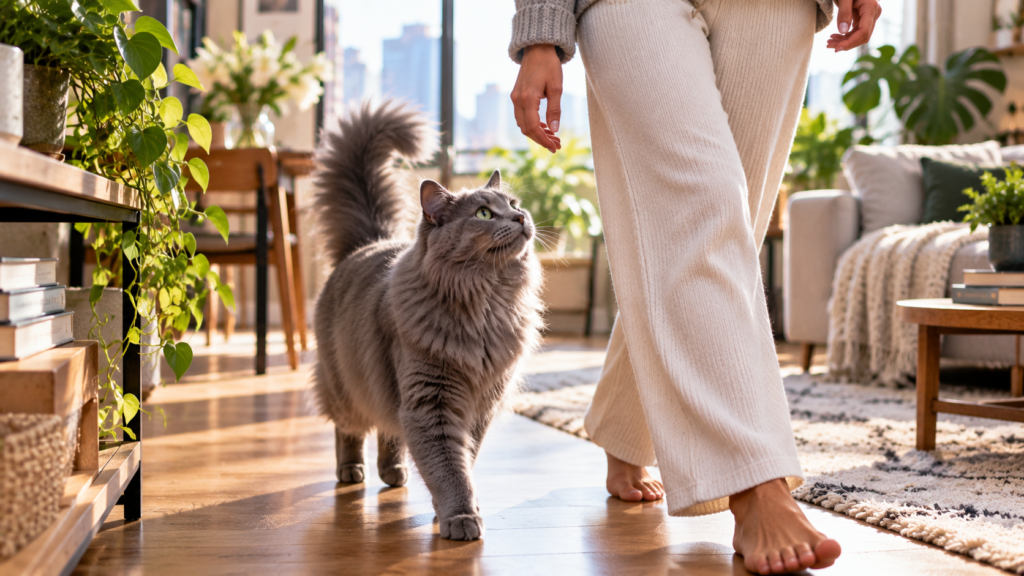
5. Nebelung
A stunning long-haired Nebelung cat
The beautiful Nebelung can be a particularly appealing choice for someone whose home is calm and predictable.
Nebelungs are described as gentle, affectionate toward their family and somewhat reserved around strangers. TICA also notes that they can entertain themselves during the day and can be suited to apartment living.
Once comfortable, however, they may follow their person from room to room.
Why it may suit solo living: enjoys a close bond while retaining some independence.
Best for:Quiet households and owners with a relatively consistent routine.
6. Bombay
A sleek black Bombay cat
If you’re looking for more interaction, consider the Bombay.
This is where lifestyle matching becomes important. Bombay cats are affectionate and highly people-oriented. TICA says they enjoy human interaction, like being involved with their families, and can adapt to apartment life.
So a Bombay may be more appealing to someone who spends substantial time at home than someone who routinely works very long hours away.
Why it may suit solo living: strong human companionship and affectionate personality.
Best for:People who work from home or want an interactive companion.
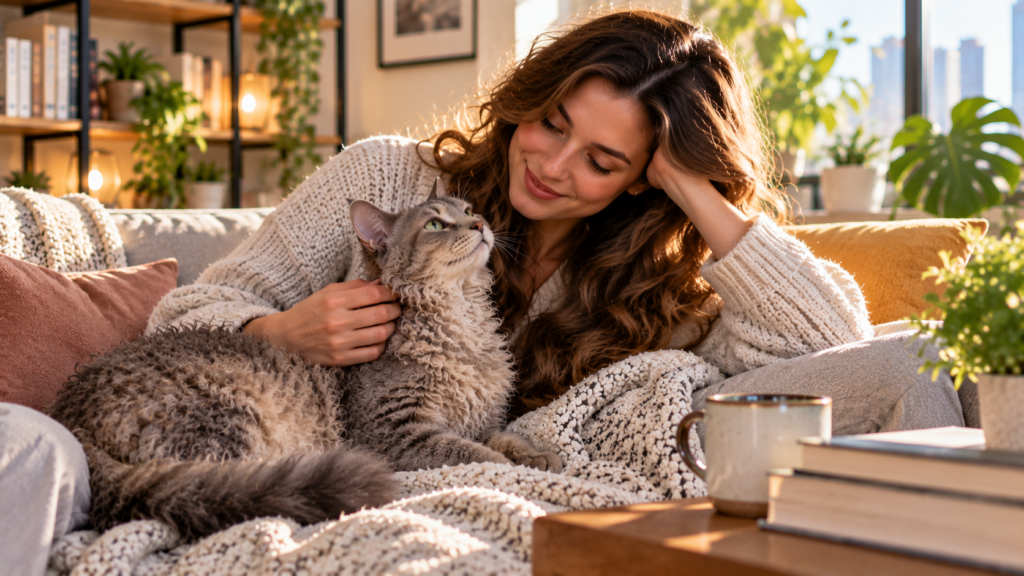
7. LaPerm
An affectionate LaPerm cat
The LaPerm offers another affectionate option.
TICA specifically describes LaPerms as companions for people who live alone. However, there’s an important qualification: they enjoy companionship and generally shouldn’t routinely be left alone for long periods without another compatible pet.
That’s exactly why choosing a cat should be based on your daily routine, not simply whether you live alone.
Why it may suit solo living: highly affectionate and people-oriented.
Best for:Homebodies, remote workers and people able to spend plenty of time with their cat.
Which Cat Is Right for Your Lifestyle?
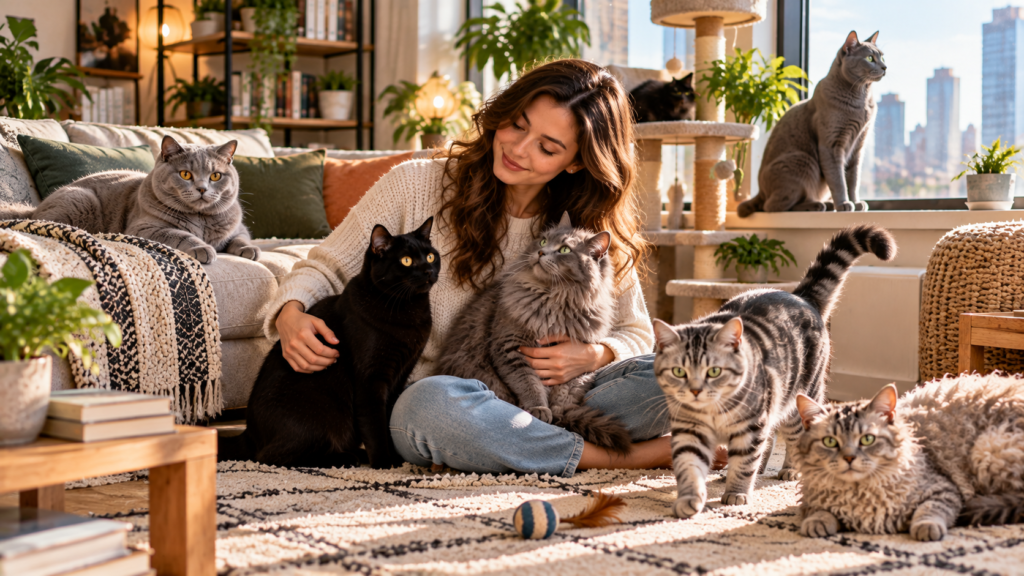
A stylish modern apartment scene showing a single woman surrounded by seven visually distinct cats
Instead of asking only “Which breed is best?”, ask yourself:
How many hours am I usually away from home?
Do I want a lap cat or a more independent companion?
How much time can I devote to interactive play?
Do I live in a small apartment or a larger home?
Would I eventually consider having two compatible cats?
A British Shorthair or Russian Blue may appeal to someone seeking more independence, while a Bombay or LaPerm may suit someone looking for more frequent interaction. These are breed tendencies rather than guarantees. TICA similarly emphasizes matching a cat with your individual lifestyle and considering shelter and mixed-breed cats as well.
Don't Overlook Shelter Cats
A heartwarming scene inside a clean modern animal shelter where a single woman meets a friendly adult rescue cat
ou don’t necessarily need a pedigreed cat to find an ideal companion.
An adult shelter or rescue cat can actually offer an advantage: caregivers may already have a good idea whether that particular cat is affectionate, independent, playful, shy or comfortable spending some time alone.
Mixed-breed cats can have widely varying personalities, so evaluating the individual cat matters more than trying to predict temperament from appearance alone.
Final Thoughts
Living alone doesn’t mean your home has to feel lonely.
The right cat can bring companionship, routine and plenty of personality into everyday life. The key isn’t simply choosing the prettiest or most popular breed—it’s finding a cat whose energy level, social needs and temperament fit your actual lifestyle.
Whether that’s an independent British Shorthair, a loyal Russian Blue or an affectionate Bombay, focus on the individual cat as much as the breed.
And sometimes, the perfect companion may already be waiting at your local shelter.
There isn’t one universally best breed. American Shorthairs, Russian Blues, British Shorthairs and other relatively adaptable breeds may suit solo households, depending on the owner’s schedule and the individual cat’s personality.
Many adult cats can tolerate periods alone, but their needs differ. They still need daily interaction, enrichment, food, fresh water, a clean litter box and appropriate veterinary care.
It depends on the individual cats, their age, temperament and whether they are already bonded. Two cats aren’t automatically better for every household.
Vivek Kumar is a pet care writer and blogger who shares practical and easy-to-understand information about dogs, cats, and other pets. His goal is to help pet parents provide happier and healthier lives for their pets.